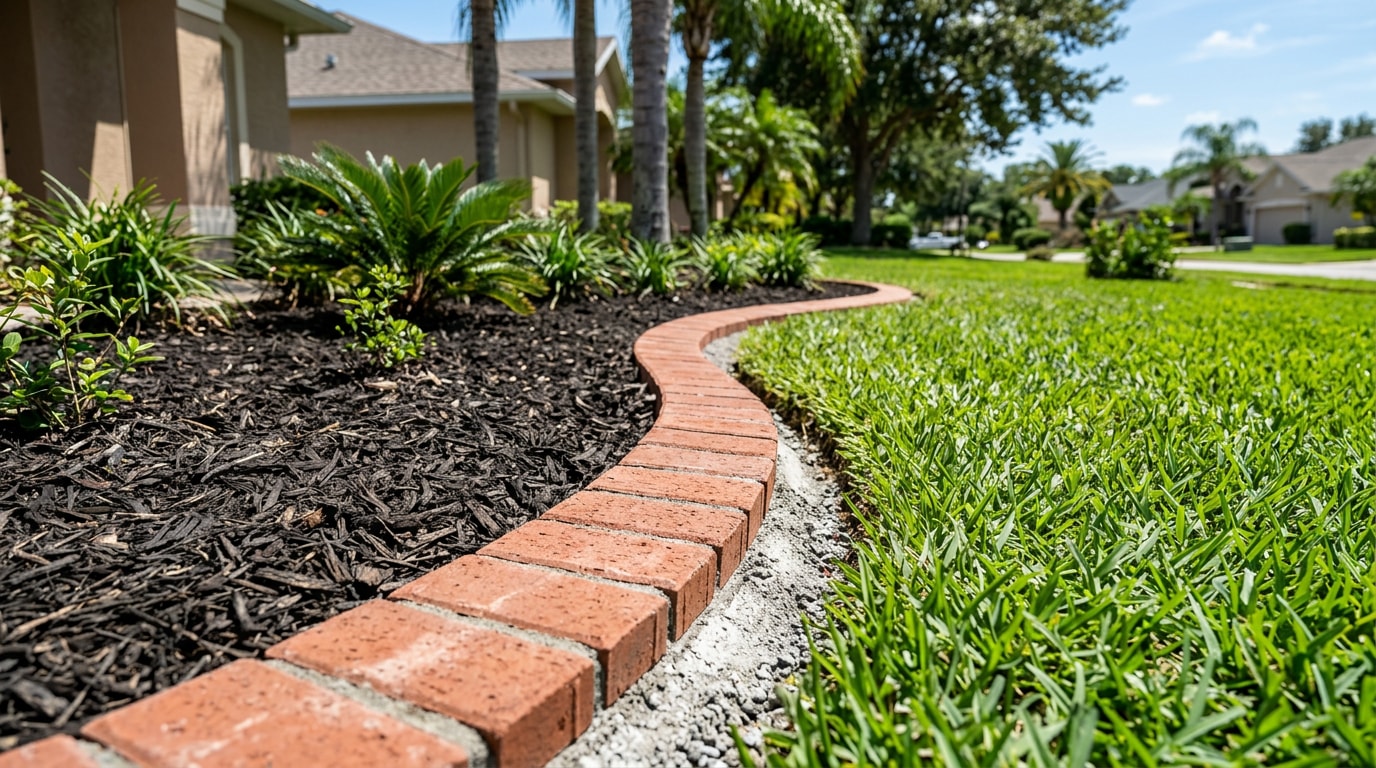
Brick edging for landscaping Central Florida, FL properties ranks among the most requested upgrades our crews install, because it holds a crisp line through sandy soil, summer downpours, and stretches of 95-degree heat without warping the way plastic strips do. Most homeowners who call us have already replaced a cheaper border once or twice. This guide covers real installed costs, how brick stacks up against concrete curbing and metal edging, and the soil and grass quirks that decide how deep a Central Florida border actually needs to go.
Brick Edging Cost in Central Florida
Installed brick or paver edging generally runs $8 to $20+ per linear foot, depending on brick style, trench prep, and labor. That range holds up against multiple industry cost guides for 2026 and fits formal landscapes, Mediterranean-style courtyards, and cottage gardens equally well, since the material follows curves or stays crisp along a straight walkway.
Here's what moves the price inside that range:
- Brick style. Standard clay pavers cost less than tumbled, antique, or custom-cut brick.
- Trench prep. Removing old edging, grass, or roots adds labor time.
- Base depth. Looser, sandier lots need more compacted base material than firmer soil.
- Layout. Curved beds take longer to set than straight runs.
If you're sourcing material yourself before a project, our landscaping supply store stocks paver and brick options by the pallet. For a full installed quote, the paver installation page breaks down process and material choices by budget.
Brick vs. Plastic, Metal, and Concrete
| Material | Installed Cost (per linear ft) | Typical Lifespan | Sandy Soil / Heat Performance |
|---|---|---|---|
| Brick/paver edging | $8–$20+ | 20+ years | Excellent once set on a compacted base |
| Plastic edging | $2–$5 | 3–7 years | Prone to UV warping and shifting |
| Metal (aluminum/steel) | $5–$12 | 10–20 years | Good, but can heave in loose sand without stakes |
| Poured concrete curbing | $7–$15 | 10–15 years (commonly cited) | Prone to cracking with ground movement |
Brick costs more upfront than plastic or basic metal, but it outlasts nearly every alternative in sandy, shifting soil. Individual bricks can also be lifted and reset if one settles, which plastic and poured concrete can't do without a full section replacement.
Why Central Florida Soil and Grass Change the Install
Two local factors decide whether any edging material lasts here: aggressive turfgrass and loose, sandy soil. Both show up in nearly every Central Florida yard, and both affect how deep and how solidly brick edging needs to be set.
Turfgrass Runners Decide Trench Depth
Central Florida's dominant lawn grass, St. Augustinegrass, spreads only through above-ground stolons rather than underground rhizomes. Unlike bermudagrass, which spreads through both above-ground runners and below-ground rhizomes, St. Augustine spreads only via its stout, aggressive stolons. That matters for edging depth: a border only has to block surface runners for St. Augustine lawns, but bermuda or zoysia patches nearby may push under a shallow edge more easily.
A trench depth of 4 to 6 inches below the soil surface is a reasonable target for most St. Augustine yards, with the deeper end of that range worth using near bermuda or zoysia turf. Brick set at this depth creates a physical barrier that cuts down on the trimming and re-edging shallow plastic strips require. If you're also dealing with runner creep into beds right now, our lawn maintenance service can get the grass line under control before edging goes in.
Loose Sandy Soil Needs a Real Base
Central Florida's sandy soil makes it genuinely hard to keep any edging in place, since loose sand doesn't hold stakes or settle the way denser clay soils do. For metal edging, that usually means staking every few feet. For brick, the fix is a properly compacted aggregate base beneath the trench.
Edge restraints that sit on an uncompacted or inconsistent base are the most common reason a border shifts within the first year. That's a documented failure point in commercial paver specifications, not just a Florida quirk. For the technical reasoning behind base compaction and restraint anchoring, the Concrete Masonry & Hardscapes Association publishes detailed edge restraint design guidance used across the paver industry.
Where Brick Borders Get Used Around Central Florida Yards
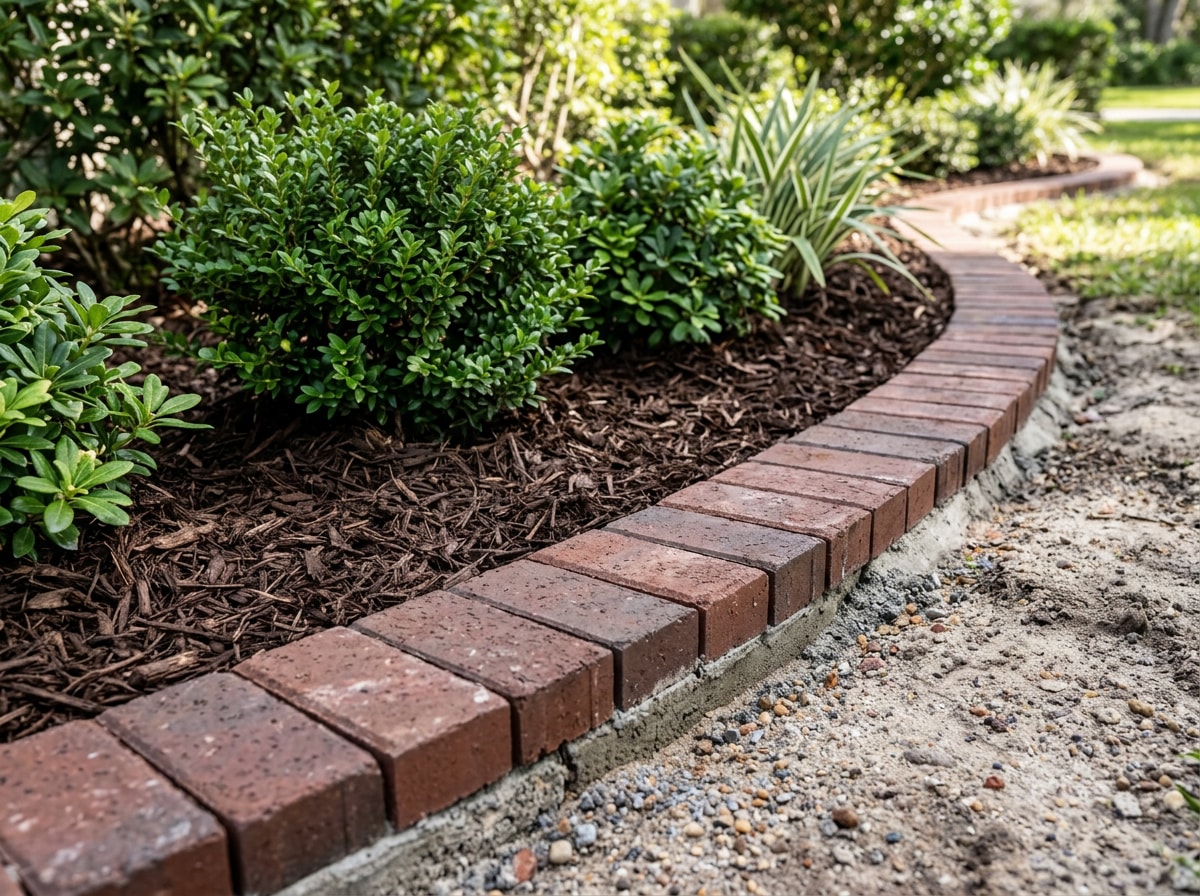
Brick borders show up in a handful of predictable spots, and each use case leans on the material's durability a little differently.
Garden Bed and Walkway Edging
Brick creates a clean, defined edge that keeps mulch, rock, and plants contained inside the bed. That containment matters most during heavy summer rain, when loose mulch tends to wash onto lawns or walkways without a physical barrier holding it in place.
Driveway Transitions
Along a driveway, a brick border softens the hard line between concrete or asphalt and the surrounding landscaping, so the transition reads as designed rather than accidental.
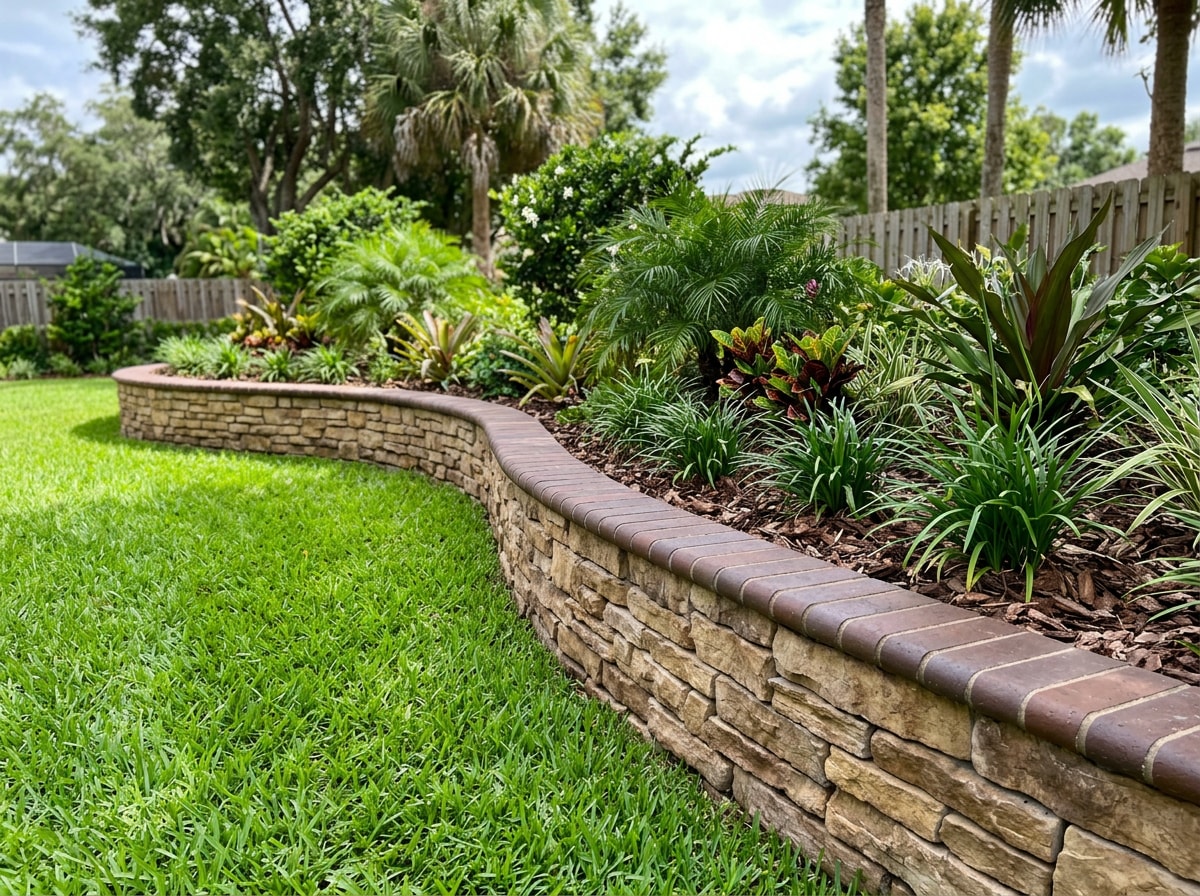
Retaining Wall Caps
Brick set along the top edge of a retaining wall turns a purely functional structure into a finished design feature, tying the wall visually into nearby beds, walkways, or turf instead of leaving it looking like an isolated slab.
Brick Paver Borders vs. Poured Concrete Curbing
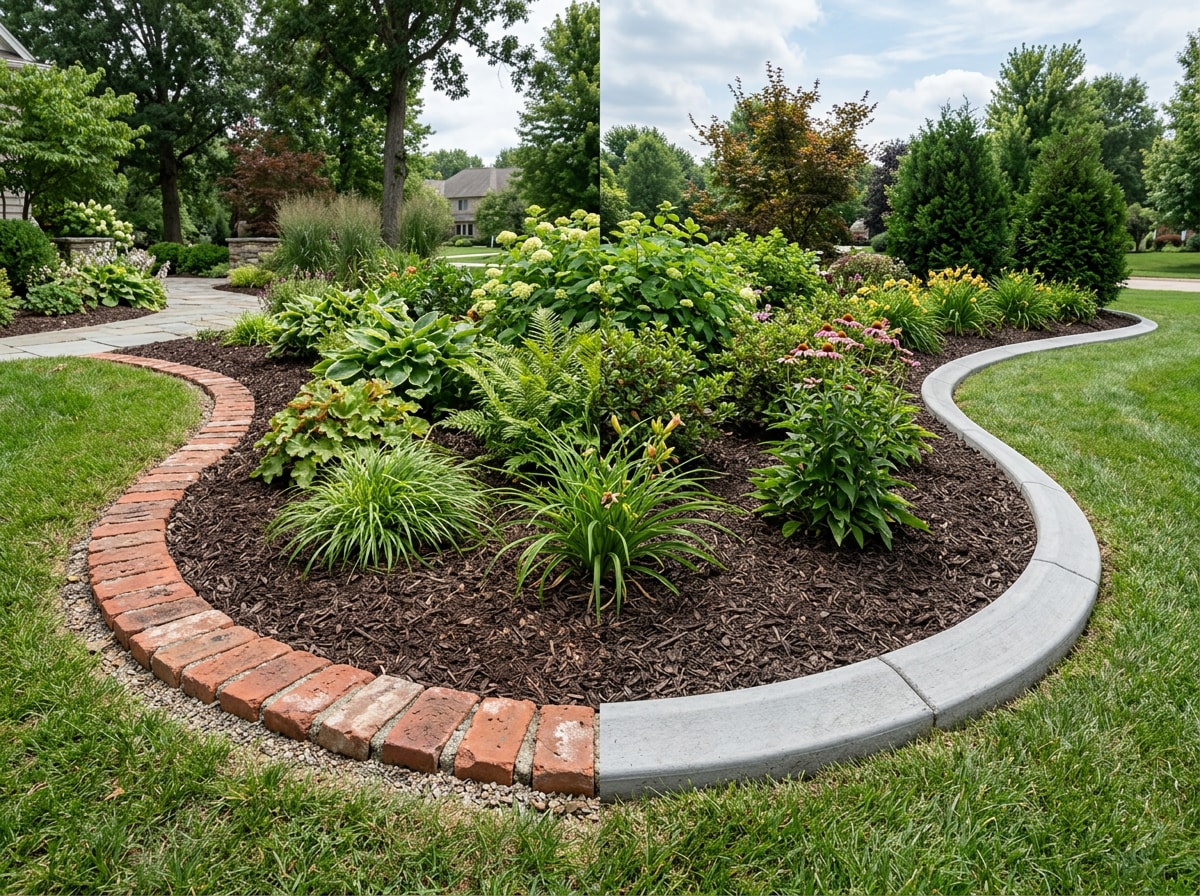
Poured concrete curbing and brick paver borders solve the same problem in different ways, and the right choice usually comes down to how each one ages and gets repaired.
With brick, individual units can be lifted and reset without disturbing the rest of the run. That keeps repairs quick and inexpensive compared to patching a cracked concrete curb, which is a single rigid pour. When ground movement or a root pushes underneath it, the whole cracked section typically has to be cut out and redone.
Brick also flexes slightly within its base rather than cracking outright, which is part of why many installers see it outlast poured curbing's commonly cited 10 to 15 year run. Paver borders also come in more colors, shapes, and finishes than extruded or stamped concrete.
Weighing brick against decorative concrete curbing for your own property? Get a free estimate and we'll walk the yard with you before you commit to either.
Other Edging Materials Worth a Look
Natural Stone and River Rock
Stone edging delivers a rustic, natural look, with river rock, coquina, and manufactured stone all popular choices in Florida landscapes. These materials resist fading in full sun, though loose stone can shift more than set brick in sandy soil without a contained border holding it in place.
Plastic and Metal Edging
Plastic and metal edging are lightweight and easy to install, and both resist rot and pest damage, which matters in Florida's humid climate. Metal tends to hold its shape over time, but plastic is prone to UV degradation under constant Florida sun, a tradeoff brick simply doesn't face. If aluminum is on your shortlist, our aluminum edging cost and install guide covers pricing and where it tends to outperform plastic.
Brick Edging and HOA or Florida-Friendly Requirements
Many Central Florida HOAs and deed restrictions now reference Florida-Friendly Landscaping guidance when reviewing bed and mulch plans, and that guidance treats edging as more than decoration. A 4' turf strip or raised edging can be used to keep mulch from washing onto the sidewalk. UF/IFAS's statewide Florida-Friendly Landscaping principles also tie reduced stormwater runoff to practices like containing mulch and loose material at the bed line, which is exactly what a properly set brick border does.
If your community falls inside our coverage area, check our Central Florida service area page for neighborhoods we work in regularly, or visit the Deep South Outdoors FL homepage to see the rest of our hardscape and lawn work.
FAQ
How much does brick edging cost per linear foot in Central Florida?
Installed brick or paver edging typically runs $8 to $20+ per linear foot, with most straightforward residential jobs landing around $10 to $14 per foot. Price depends on brick style, trench length, curves, and how much old edging or grass has to be removed first.
How deep should brick edging be for a Florida lawn?
Plan for a trench 4 to 6 inches deep for most St. Augustine lawns, leaning toward the deeper end near bermuda or zoysia grass. This depth, paired with a compacted base, keeps the border from shifting or being pushed up by grass runners.
Does brick edging crack in Central Florida's heat and rain?
Properly installed brick on a compacted base resists cracking far better than poured concrete curbing, because individual units flex slightly instead of fracturing as one rigid piece. Most cracking problems trace back to a skipped or shallow base, not the brick itself.
Brick edging vs. concrete curbing, which lasts longer?
Brick paver borders generally outlast poured concrete curbing, which is commonly cited at 10 to 15 years before major cracking appears. Individual bricks can also be replaced one at a time, where concrete curbing usually needs a full section cut out and repoured.
What's the best edging material for sandy Florida soil?
Brick or paver edging set on a compacted base performs best in sandy soil, since the base (not the brick itself) is what resists sinking and shifting. Staked metal edging is the next best option if budget is the main constraint.
Will brick edging meet my HOA's landscaping requirements?
Most HOAs that reference Florida-Friendly Landscaping guidelines favor raised, solid edging over loose material, since it helps contain mulch and reduce runoff. Brick typically satisfies these requirements, but it's worth confirming exact material and height rules with your HOA board before installing. If you want pricing specific to your yard, request a free estimate and we'll factor in any HOA specs up front.