Solar lights for landscaping Sanford, FL properties are one of the easiest upgrades a homeowner can make without an electrician or a trench. Florida's sun exposure keeps fixtures charged most of the year, even through afternoon thunderstorms. This guide breaks down the fixture types, specs, and placement rules that separate a lit yard from a dark one.
Why Solar Landscape Lighting Works So Well in Sanford
Solar landscape lights solve a handful of problems at once. There's no trenching, no electrician visit, and no monthly bump in your utility bill, since each fixture generates and stores its own power during the day.
LED lighting is gaining in popularity, and LEDs use at least 75 percent less energy than incandescent bulbs while lasting far longer , which is part of why solar and LED combinations have become the default for outdoor residential fixtures. Florida consistently ranks among the top solar-resource states in the country, and homeowners can check a property's real sun exposure using NREL's PVWatts calculator, the federal tool used for solar production estimates nationwide.
Beyond energy savings, solar lights add a security layer. Lit walkways and driveways cut down on trip hazards, and they give a yard the kind of evening curb appeal that's hard to get from a dark lawn. That combination is why solar has moved from a novelty into a mainstream choice for Central Florida properties.
Types of Solar Landscape Lights
Different fixture styles handle different jobs, from guiding footsteps to highlighting a mature oak. Knowing the categories below makes it easier to shop with a plan instead of guessing at the hardware store.
Path & Downlighting
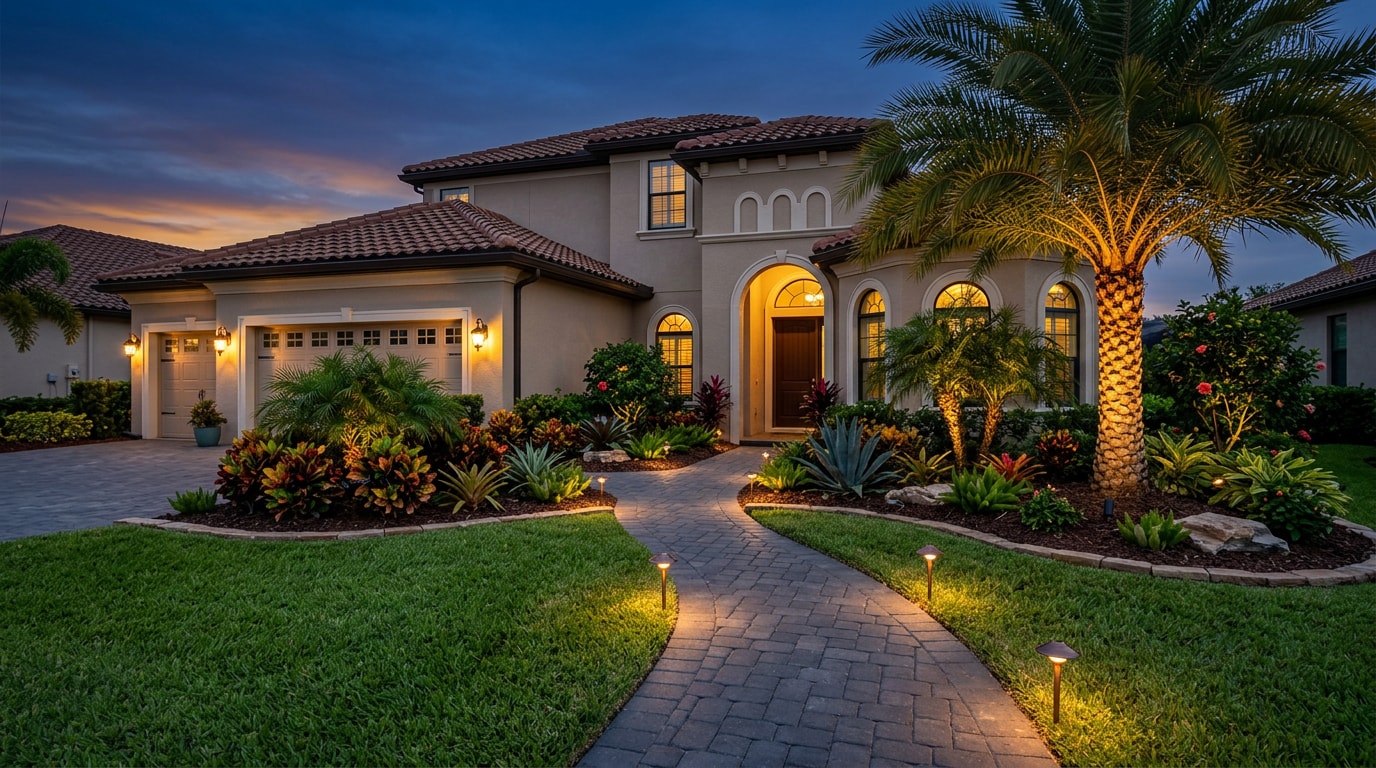
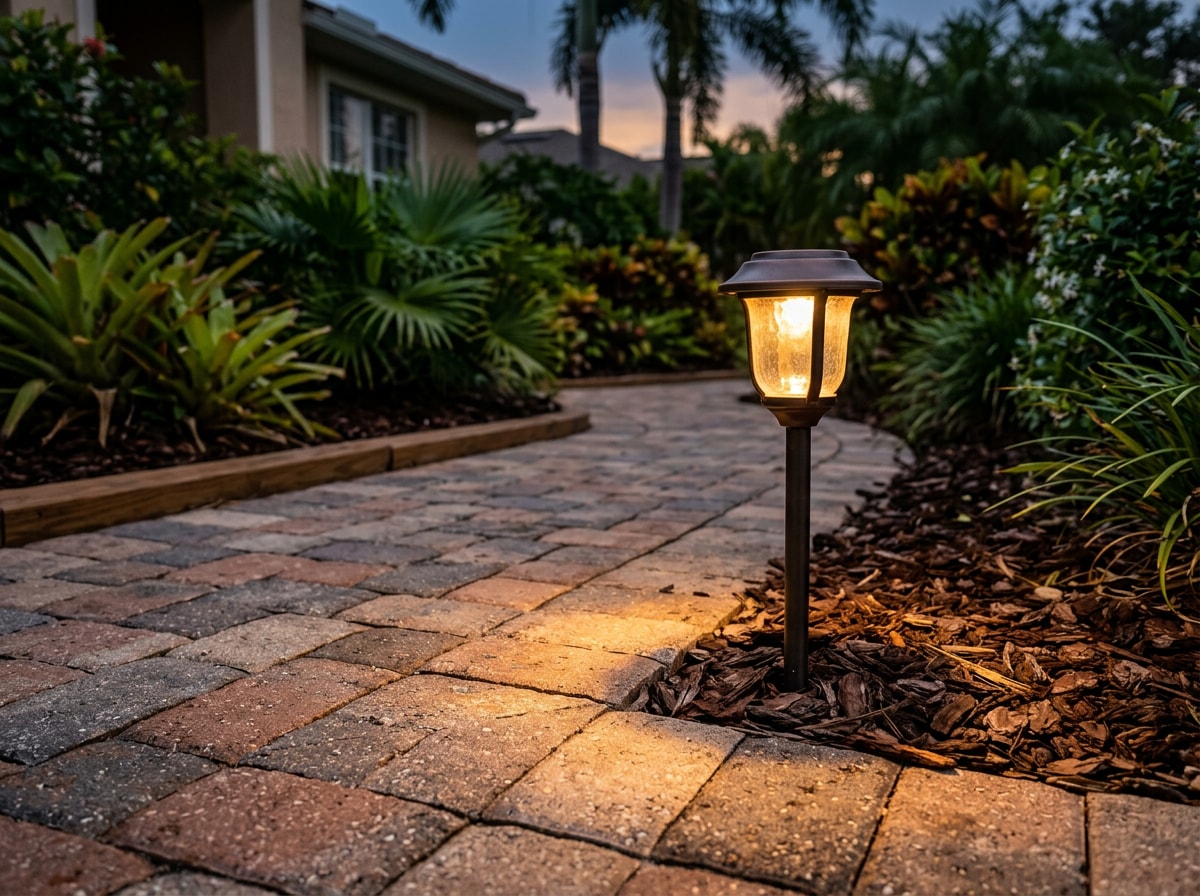
Solar path lights are staked, low-profile fixtures that cast a soft, even pool of light downward along walkways and driveways. They're built for navigation rather than decoration, which is why they're usually spaced every 6 to 8 feet along a path.
Because they sit close to the ground, these fixtures install without digging and relocate easily if your landscaping changes. They're often the first fixture type homeowners add, since lighting steps and walkways is usually the top priority.
Uplighting & Spotlights
Solar uplighting flips the approach. Fixtures sit at the base of a tree, palm, or column and shine upward, creating dramatic shadows and highlighting texture after dark. Solar spotlights serve the same purpose with a more focused, adjustable beam.
This category is most associated with accent lighting, since it's less about function and more about showing off architectural details or a specimen tree. Homeowners with mature palms or a stone facade tend to get the most visual payoff here.
Deck & Step Lights
Compact solar deck and step lights mount directly onto risers, railings, or deck posts instead of staking into soil. They're sized to blend into the structure itself rather than standing out as separate fixtures.
Their main job is safety, marking the edge of a step or deck drop-off at night. The warm glow also adds a finished look to outdoor living spaces.
Hardscape Lighting
Hardscape lighting is built for retaining walls, patios, and paver surfaces rather than planting beds. Solar paver lights install flush into joints or wall caps, outlining the edges of a hardscape feature so it reads clearly at night instead of disappearing into the dark.
This category works well alongside path lights. Together they define the full outline of a patio or seating area, not just the walkway leading to it.
String & Specialty Lights
Solar string lights bring a softer, decorative layer to patios, pergolas, and entertaining spaces. Unlike functional path or security fixtures, their purpose is ambiance for evening gatherings rather than navigation.
Many newer versions use small, discreet solar panels built into the string itself, so there's no separate panel to position. Strands wrap posts, drape between trees, or outline a pergola frame.
Security & Flood Lights
Solar flood lights and broader solar security fixtures are the higher-output end of the category. They're built for driveways, side yards, and dark corners of a property rather than subtle accenting, typically running 700+ lumens, well above a standard path light.
These fixtures often include motion sensors to conserve battery between triggers, which stretches runtime while still lighting up the moment it's needed. Our landscape lighting installation page covers design and install for all six fixture categories above.
Key Features That Separate Good Solar Lights from Junk
Fixture type is only half the decision. The components inside determine how bright, reliable, and long-lasting a light actually is.
Brightness and LED Type
Matching lumens to the job keeps a yard from looking either too dim or harshly overlit. The ranges below are the industry-standard starting points most installers use:
| Use Case | Typical Lumens |
|---|---|
| Path/walkway lights | 100-200 lumens |
| Step and hardscape lights | 50-185 lumens |
| Accent/uplighting | 120-400 lumens |
| Security/flood lights | 700-1,300+ lumens |
Color rendering matters more than most buyers realize. A lower-quality LED can wash out greens and warm tones in plants and brick, while a better fixture renders them closer to how they look in daylight. When comparing products, check for a CRI rating alongside the lumen figure instead of lumens alone.
Solar Panel and Battery Quality
The battery inside a fixture affects runtime and lifespan more than almost any other spec. Lithium-ion batteries generally outperform older NiMH (nickel-metal hydride) cells, holding a charge longer over repeated cycles.
Heat is the bigger factor in Florida specifically. Capacity degradation under different operating conditions is significantly impacted by cycling, and repeated charge/discharge cycles can significantly reduce a battery's life span , according to NREL battery research. That means a cheap battery baking on a south-facing panel through a Sanford summer will fade faster than the same battery in a cooler climate, which is one reason budget fixtures are often the first component to fail.
Panel efficiency matters too. A higher-quality panel captures more usable energy per hour of sun, which means faster charging even on partly cloudy days.
Placement & Installation Tips for Central Florida Yards
Getting solar fixtures to perform well in Sanford comes down to sun exposure and spacing more than brand. Each fixture needs direct, unobstructed sunlight for most of the day. A panel shaded by a fence, eave, or overgrown shrub will undercharge no matter how good the battery is.
A few placement rules worth following:
- Space path lights evenly, roughly every 6 to 8 feet, so the path reads as a continuous line rather than isolated bright spots.
- Angle uplights for trees or elevated features slightly away from foot traffic to avoid glare at eye level.
- Tilt panels toward the south for maximum daily sun exposure.
- Keep fixtures a few inches above mulch to prevent moisture pooling during rainy season.
- Test placement for a night or two before committing to a permanent spot.
If the DIY side feels like more than you want to take on, our team handles layout and placement as part of a full landscape lighting installation project. On jobs we've run around Sanford, the single biggest performance difference between a bright yard and a dim one is almost never the brand of fixture. It's whether someone actually mapped the sun path before staking lights.
Solar vs. Wired Low-Voltage Lighting: Which Fits Your Yard
Solar isn't the only path to landscape lighting, and it's worth weighing it honestly against wired low-voltage systems before deciding.
| Factor | Solar Lights | Wired Low-Voltage |
|---|---|---|
| Upfront cost | Lower, no trenching or transformer | Higher, wiring, transformer, labor |
| Ongoing electricity cost | None | Small but continuous |
| Brightness in cloudy weather | Can dim on overcast runs | Consistent regardless of weather |
| Typical lifespan | 2-5 years (battery-dependent) | 10+ years (fixture-dependent) |
Solar wins on install cost and ongoing electricity use. The outdoor sector has seen greater LED adoption in nearly every application than the indoor sector, contributing 40% of the total energy savings from LED lighting in 2018 , per DOE's LED Adoption Report, which tracks the shift away from older outdoor fixture types nationwide. Wired systems win on reliability during stretches of cloudy weather and generally last longer overall.
Many Sanford homeowners land on a hybrid approach: wired for high-use areas like an entry or pool, solar for accents and secondary paths. If you want a side-by-side look at what full wiring involves, see our guide on landscaping lights wired in Oviedo, FL for the code and cost details.
Maintenance: Keeping Solar Lights Working Through Humidity and Storm Season
Solar fixtures need less upkeep than wired systems, but they're not maintenance-free. Wipe down solar panels every few weeks. Dust, pollen, and Florida's frequent rain residue can noticeably cut charging efficiency if left to build up.
Check for overgrown foliage shading the panels after any growth spurt, particularly in spring and summer. Rechargeable batteries inside most fixtures typically need replacement every 1 to 2 years, even though the fixture housing itself can last much longer.
Battery degradation is a normal part of the solar light lifespan, and it accelerates with heat exposure rather than age alone. For decorative string lights used seasonally, storing them indoors during off-season months protects both the panel and battery from unnecessary wear during hurricane season storage, when fixtures sit unused for weeks.
When to Call a Professional for Landscape Lighting
Not every homeowner wants to handle fixture selection and placement solo, and that's where a professional install earns its cost. A typical project starts with a design consultation to map out which zones need path lighting, accenting, or security coverage, followed by fixture placement tailored to your yard's layout and sun exposure.
For yards that mix solar and wired fixtures, say, solar accents paired with wired lighting for a pool or entry, a professional can handle the wiring portion so everything works as one cohesive system instead of mismatched add-ons. Contact us for a free estimate if you'd rather skip the trial-and-error.
Enjoy Solar Landscape Lighting All Year Round in Sanford
Central Florida's long sunny season and mild winters make solar landscape lighting a practical fit here. Panels keep charging consistently across most of the year, without the extended low-sun stretches that homeowners in northern climates deal with every winter.
That reliability means more evenings of usable outdoor lighting, whether it's a quiet walk up a lit path or hosting friends on a patio strung with solar lights. See our Sanford, FL service area page for more on what our crews handle throughout Seminole County, or visit our homepage for the full range of landscaping and outdoor living services we install.
FAQ
Do solar landscaping lights actually work?
Yes, modern solar landscape lights work well, especially in a sunny climate like Central Florida's. Performance depends heavily on daily sun exposure and battery quality. Fixtures placed in shade or fitted with cheap batteries underperform, but quality fixtures with full sun exposure deliver reliable nightly light.
How long do solar-powered landscape lights last?
There are two timelines to consider: nightly runtime, typically 6 to 10 hours per full charge, and overall product lifespan, which usually runs 2 to 5 years before the battery or LED needs replacing. Fixture housings often outlast the internal components by several years.
What are the best long-lasting solar lights for outdoor use?
Long-lasting solar lights typically share a few traits: lithium-ion batteries over cheaper NiMH cells, a higher IP rating (IP65 or above) for weather resistance, and quality LEDs rated for tens of thousands of hours. Checking these specs matters more than brand name alone.
How many lumens do I actually need for landscape lighting?
It depends on the fixture's job. Path and step lights work well at 100-200 lumens, accents and uplighting run 120-400 lumens depending on what you're highlighting, and security floods need 700+ lumens. More lumens isn't automatically better; overlit yards look harsh rather than polished.
Can solar landscape lights handle Florida's rainy season?
Yes, as long as the fixture carries an IP65 rating or higher. The bigger risk in Florida isn't rain resistance, it's panels staying shaded under storm-driven plant growth or getting splashed with mulch and dirt during heavy downpours, both of which cut charging efficiency until cleaned.