Small evergreen trees for landscaping Lake Mary, FL yards have to handle sandy soil, long humid summers, and zone 9b heat that kills off a lot of popular nursery favorites within a season. The good news: a short list of species handles these conditions well and still delivers year-round privacy, structure, and curb appeal. Below is the species list we actually recommend on local properties, not a generic national roundup.
Quick-Reference: Top Small Evergreen Trees for Lake Mary, FL
Start here if you just need a shortlist before digging into details.
| Tree | Mature Height | Sun | Heat/Humidity Tolerance | Best Use |
|---|---|---|---|---|
| Dwarf Yaupon / Burford Holly | 10–15 ft | Full sun | Excellent | Screening, foundation |
| Little Gem Magnolia | 15–20 ft | Full sun | Good | Specimen, front yard |
| Columnar Arborvitae | 10–20 ft | Full to part sun | Fair | Tight side yards |
| Juniper (upright forms) | 10–20 ft | Full sun | Excellent | Driveways, berms |
| Cryptomeria | 15–30 ft | Full sun | Good | Privacy screen |
| Eastern Red Cedar | 20–40 ft | Full sun | Excellent | Windbreak |
| Noble Privet | 10–15 ft | Full to part sun | Excellent | Formal hedge |
| Texas Olive / White Geiger | Up to 20 ft | Full to part sun | Good | Flowering accent |
| Ornamental Olive | 15–25 ft | Full sun | Good (needs sharp drainage) | Specimen, dry beds |
| Walter's Viburnum | 10–20 ft | Full to part shade | Excellent | Native screen |
Full details on each species, including watch-outs, are below.
Lake Mary's Growing Conditions Shape Which Trees Survive
Lake Mary sits in USDA hardiness zone 9b, with sandy, fast-draining soil and long, humid summers. Trees suited to cooler, drier climates typically decline fast here, which is why heat-tolerant, drought-adapted species are the better long-term choice.
Seminole County's sandy soil drains quickly, which helps roots avoid rot but also means trees dry out faster during summer dry spells. Add in intense sun and sudden afternoon storms, and you get a growing environment that's noticeably different from the generic "best evergreen" lists written for the whole country. Species like blue spruce or yew, both popular up north, usually struggle or die within a season or two once planted in zone 9b.
You can confirm your property's exact classification on the USDA Plant Hardiness Zone Map, and our Lake Mary, FL service area page covers how we plan plantings around local soil and sun exposure.
How to Choose the Right Evergreen for the Job
Before comparing species, decide what job the tree needs to do. Privacy, wind protection, and fast coverage call for different spacing and different trees.
Privacy Screens and Windbreaks
Privacy trees need enough mature width and dense foliage to block sightlines without leaving gaps. Spacing commonly runs 6 to 10 feet apart depending on a species' spread at maturity, with tighter spacing giving a faster hedge effect.
Many Lake Mary subdivisions have HOA rules on fence-line plantings and setback distances. Confirm community guidelines before installing a row of windbreak trees along a property line. Our tree service team can help you map out spacing that satisfies both your yard and your HOA.
What "Fast Growing" Actually Means
In arborist terms, a fast-growing tree adds 25 inches or more in height per year. Moderate growers add 13 to 24 inches annually, and slow growers add 12 inches or less. Homeowners wanting quick privacy screening should look specifically for species rated in the fast category.
Growth rate claims vary by region, so a tree marketed as fast-growing nationally may grow at a different pace in Florida's heat and humidity. The UF/IFAS Gardening Solutions small trees guide is a reliable, Florida-specific reference for sizing before you buy.
Spruce, Pine, and Arborvitae Compared
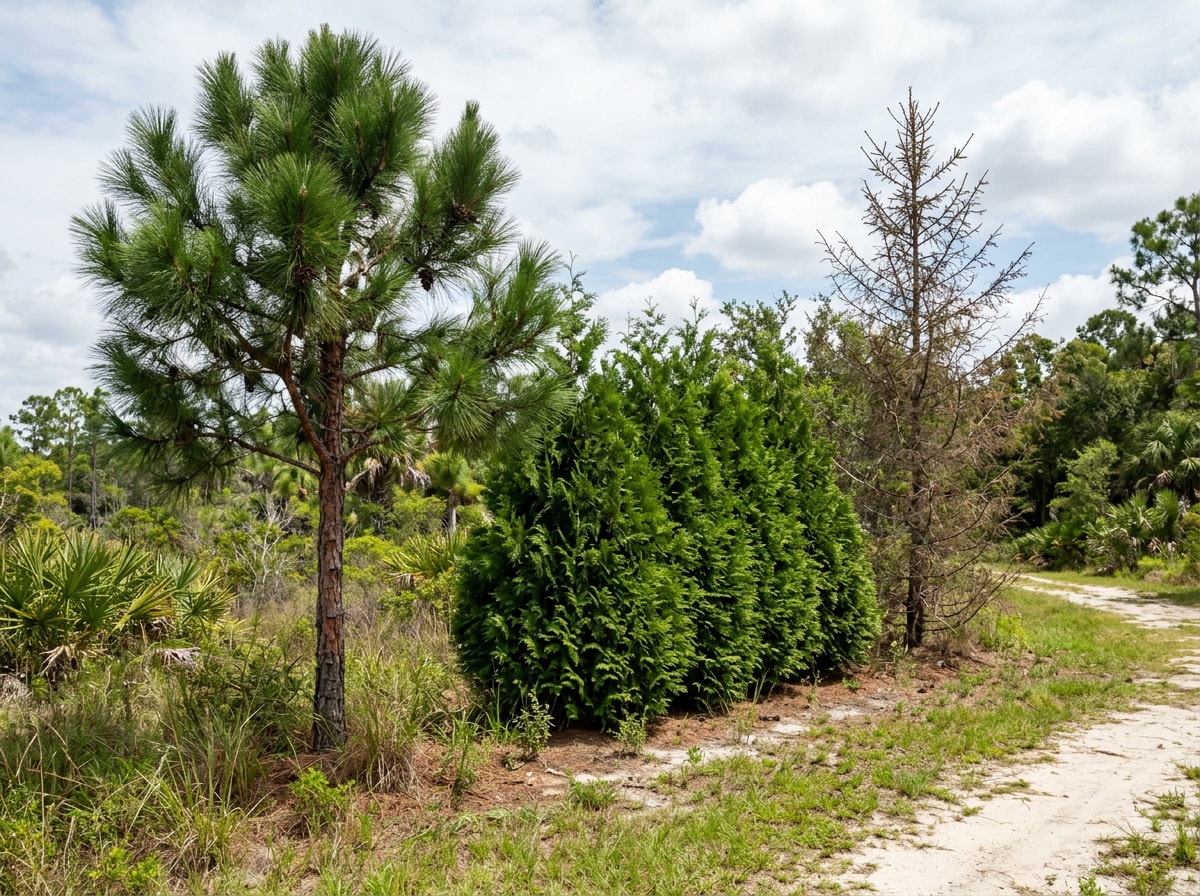
Spruce trees generally don't hold up in Lake Mary's climate and decline within a few years once sustained heat and humidity set in. Pines, especially native or Florida-adapted varieties, tolerate sandy soil and heat far better, making them solid windbreak trees. Arborvitae lands in the middle: some cultivars manage acceptable performance with excellent drainage, but they tend to thin out faster here than in cooler regions.
| Tree | Mature Size | Sun Needs | FL Heat/Humidity Tolerance | Maintenance |
|---|---|---|---|---|
| Spruce | 30–60 ft | Full sun | Poor | High |
| Pine (native) | 20–80 ft | Full sun | Excellent | Low |
| Arborvitae | 10–20 ft | Full to part sun | Fair to moderate | Moderate |
In this comparison, pine and select arborvitae cultivars clearly outperform spruce for most Lake Mary properties. Browse our landscaping supply store for species already stocked and tested in Florida conditions.
10 Best Small Evergreen Trees for Lake Mary, FL Landscaping
These ten species consistently perform in Lake Mary's zone 9b climate. Cold-climate options like spruce and yew, covered above, were left off this list on purpose.
Hollies
Holly trees are among the most dependable small evergreens for Central Florida.
- Dwarf Yaupon, Burford, and East Palatka hollies tolerate sandy soil, full sun, and occasional drought.
- Most stay manageable at 10–15 feet.
- Dense, glossy foliage works well for screening or foundation planting.
Magnolias
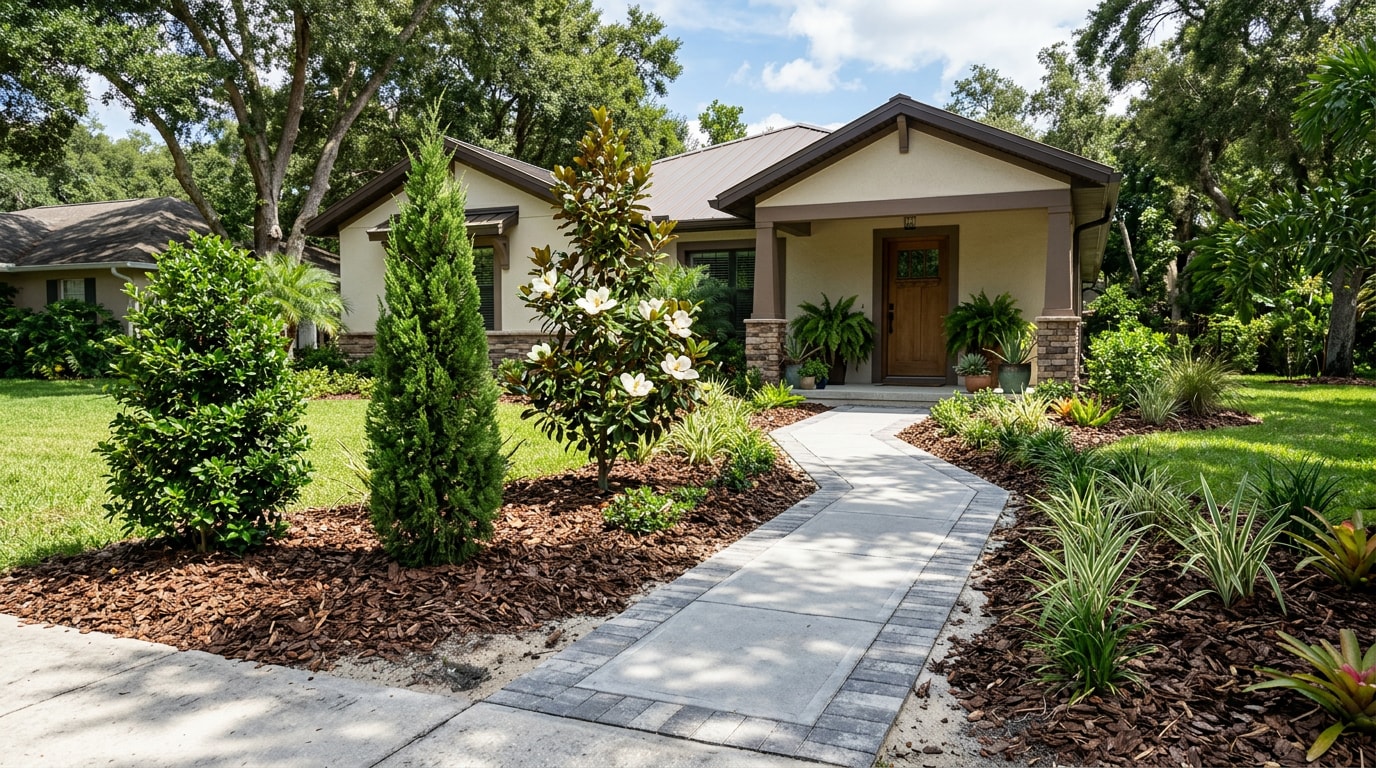
Compact Southern Magnolia cultivars, such as 'Little Gem,' bring fragrant blooms to smaller lots without the sprawling 60-foot spread of traditional magnolias. These top out around 15–20 feet and tolerate Florida humidity well, though they need consistent moisture while getting established.
Arborvitae
Arborvitae performance is mixed compared to cooler climates, but narrow, upright cultivars still function as a privacy hedge in well-drained sites. They stay columnar and compact, suiting tight side yards, though they need more monitoring for root rot than native alternatives.
Junipers
Junipers handle Lake Mary's sandy soil and dry spells better than almost anything else on this list. These drought-tolerant evergreens need full sun and sharp drainage, making them a good fit along driveways, berms, or other spots that dry out quickly.
Cryptomeria
Cryptomeria, also called Japanese cedar, has earned a real reputation as an evergreen privacy tree in Florida yards, not just on paper. Its soft, feathery foliage and fast growth make it popular for screening, and it tolerates Central Florida humidity noticeably better than true spruce.
Cedars
Not every cedar performs equally here. Eastern Red Cedar, a native species, tolerates heat, drought, and sandy soil with little complaint, while some imported cedar varieties struggle with humidity-related disease. For long-term reliability, native or Florida-adapted selections are the safer pick.
Noble Privet
Noble privet is a dense, fast-growing evergreen that takes pruning well, making it easy to shape into a formal hedge or a small ornamental tree form. Its tight branching and glossy leaves give year-round structure, and it adapts readily to sandy, well-draining soils.
Texas Olive or White Geiger
The Texas Olive and White Geiger both bring tropical flowering interest while staying evergreen through Lake Mary's mild winters. Both bloom through much of the year and tolerate heat and humidity far better than temperate ornamentals.
Ornamental Olive
Ornamental olive plantings have grown more popular as homeowners look for drought-tolerant evergreens with a silvery, textured look. They work best in raised beds or sharply draining sandy spots, since standing water after heavy rain is one of the few things that reliably kills them.
Walter's Viburnum
Walter's Viburnum is a true Florida native evergreen, valued for small white spring blooms, dark berries, and strong wildlife value. The Florida Native Plant Society lists it as suitable for native landscape use across Central Florida, and it adapts naturally to local rainfall and soil patterns.
Planting and Spacing Tips That Actually Matter Here
Species selection only gets you halfway. How a tree goes into the ground determines whether it survives its first Lake Mary summer.
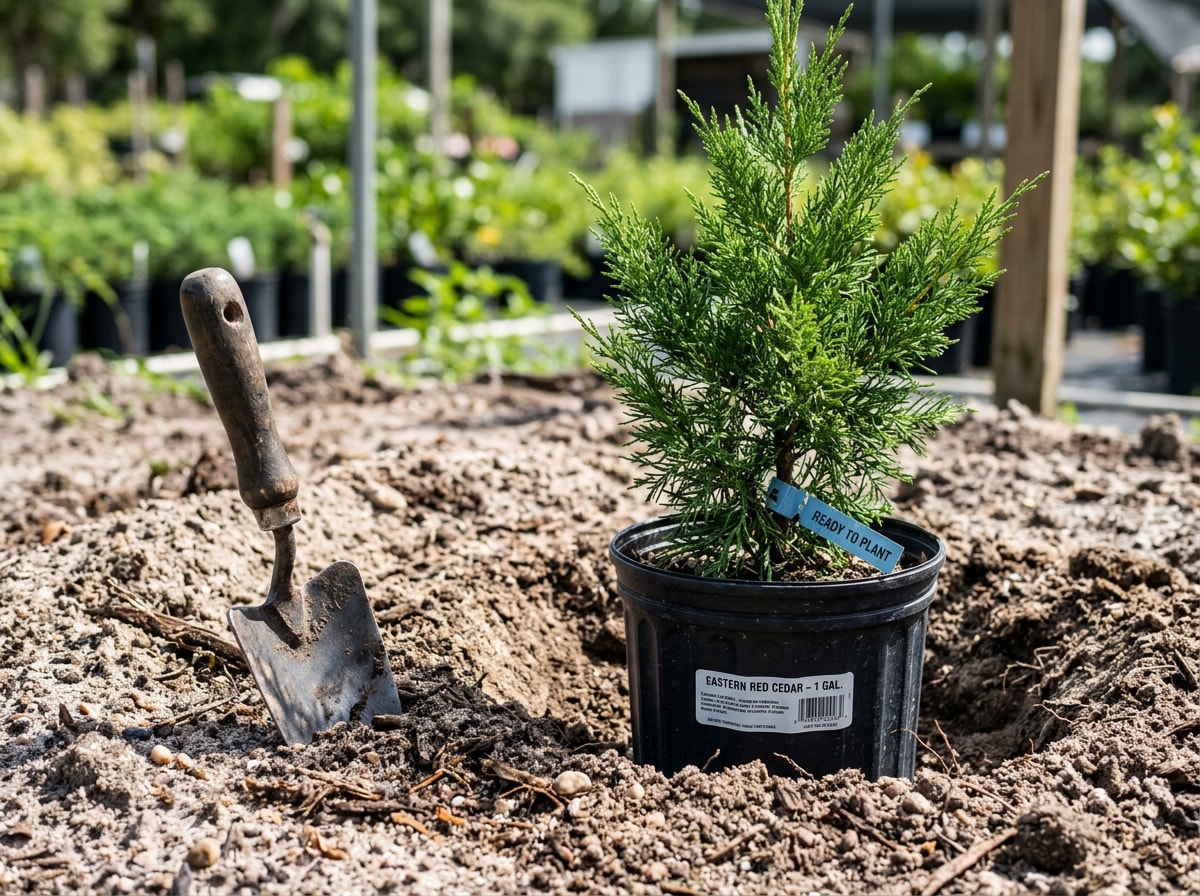
- Plant in cooler months. Fall through late winter gives roots time to establish before summer heat stress hits.
- Dig wide, not deep. The planting hole should be 2–3 times the width of the root ball but no deeper, since sandy soil settles and can bury the root flare.
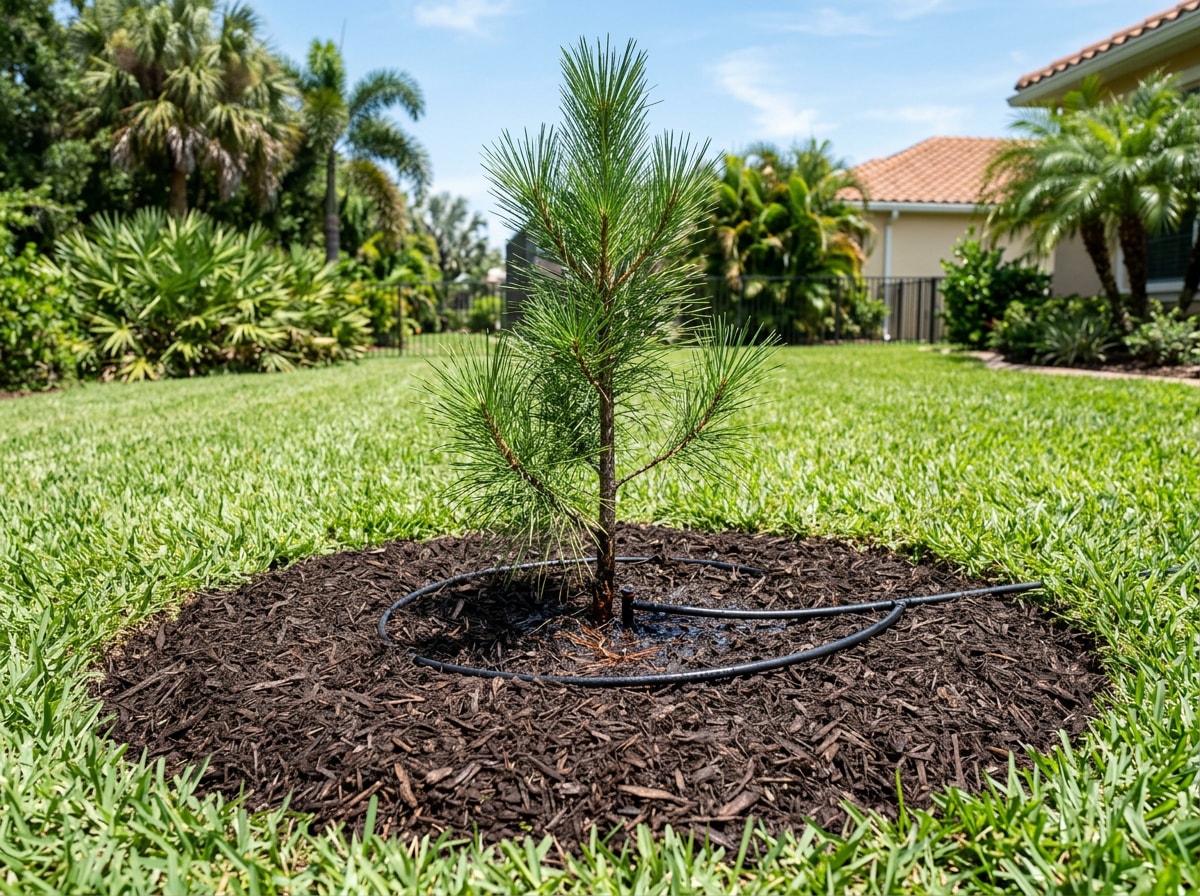
- Water deeply, less often. New plantings need consistent moisture for the first 60–90 days; shallow daily watering encourages weak, surface-level roots in sandy soil.
- Mulch a 2–3 inch ring, kept a few inches back from the trunk, to slow moisture loss between waterings.
- Check your irrigation zones before planting so new trees aren't left out of coverage or overwatered by a lawn zone built for turf. Our irrigation system installation team can add a dedicated zone for new tree plantings.
We've installed and maintained these exact species across dozens of Lake Mary and Seminole County properties, and the pattern holds every time: drought-adapted, Florida-tested trees outperform imported "cold climate" favorites within the first year, not just on paper.
Once trees are established, routine pruning keeps hedges dense instead of leggy. If your screening trees have outgrown their space or need shaping, our tree trimming service handles that without stressing the tree. For a broader look at how trees fit into a full landscape plan, our softscape services guide for Central Florida covers planting beds, sod, and garden design alongside tree placement.
Ready to plan your planting? Get a free estimate and we'll walk your property, confirm sun and drainage, and recommend species that will actually hold up. You can also browse our full range of services from the Deep South Outdoors FL homepage.
FAQ
Are there any evergreen trees that stay small?
Yes. Dwarf Yaupon holly, junipers, and noble privet all mature under 15 feet with proper pruning. Check the species list above for mature sizes before deciding where to plant.
What are some good small trees for landscaping in Florida?
Hollies, Cryptomeria, Walter's Viburnum, and Eastern Red Cedar are reliable choices because they tolerate sandy soil, heat, and humidity. Each offers something different, from year-round screening to native wildlife value.
What are the best evergreen trees for front yard landscaping?
Front yard evergreens should offer clean form and year-round color, not just density. Compact Southern Magnolia, Cryptomeria, and dwarf holly cultivars all provide strong curb appeal with manageable mature sizes.
What are some good dwarf evergreen trees for my front yard?
Dwarf holly cultivars and small juniper varieties fit tight front yard beds without crowding walkways or foundations. Schedule a free landscape consultation if you want help matching species to your lot.
How far apart should I space evergreen trees for a privacy screen?
Most small evergreens need 6 to 10 feet between trunks for a solid screen at maturity. Tighter spacing fills in faster but increases competition for water and nutrients in sandy soil.
Do evergreen trees in Florida ever lose their leaves?
Most stay green year-round, but a few, like Walter's Viburnum, are "tardily deciduous" and briefly drop older leaves right before new growth emerges in late winter. This is normal and not a sign of disease.
---
About Deep South Outdoors FL: Our crews design, install, and maintain landscaping across Lake Mary, Sanford, Oviedo, and the greater Central Florida area, including tree selection, irrigation, and ongoing lawn care. Questions about a specific property? Contact our team for a free on-site estimate.