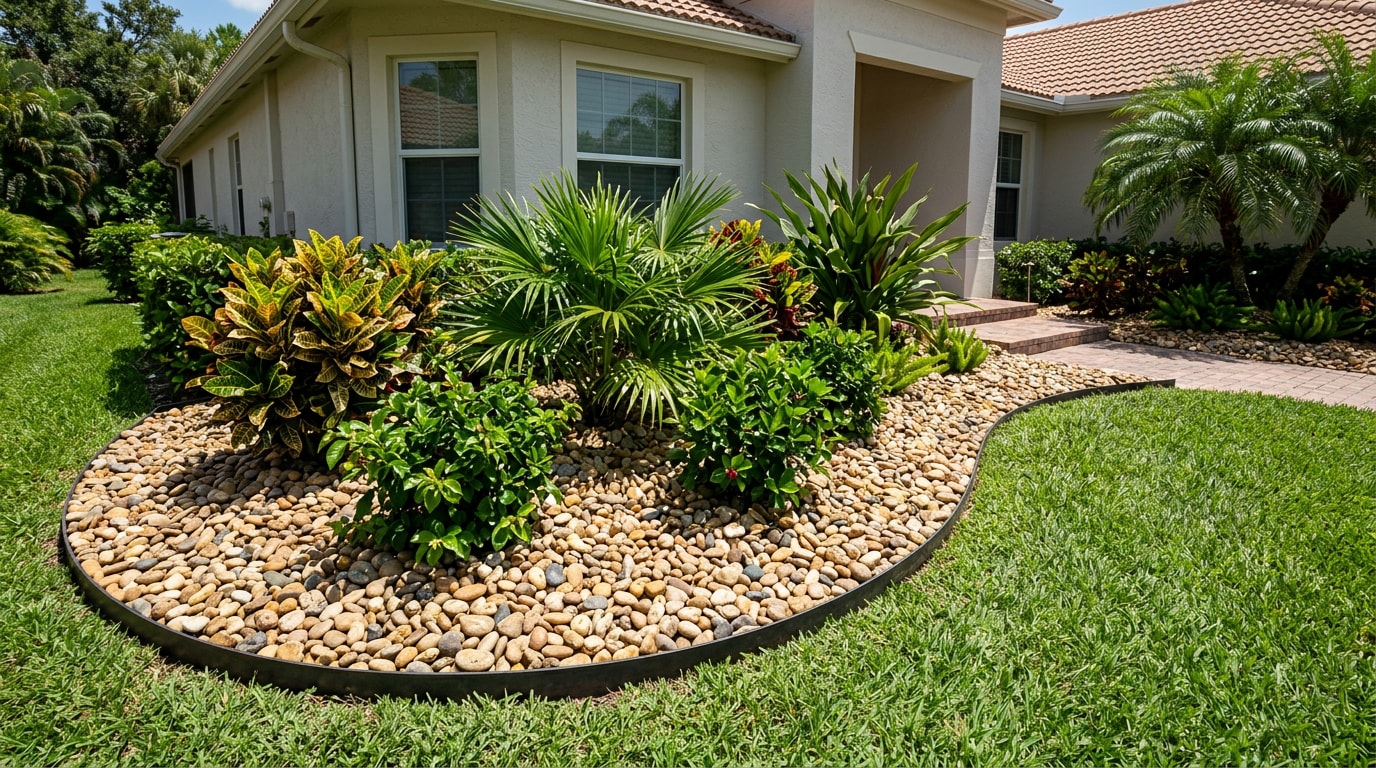
River rock landscaping in Sanford, FL fixes two problems most homeowners fight every summer: mulch that washes out of beds and water that pools where it shouldn't. This guide covers rock sizing, proper depth, real installation steps, and what local pricing looks like, using actual Florida climate and soil data instead of generic advice. By the end, you'll know enough to order the right amount the first time or ask a contractor sharper questions.
Why River Rock Landscaping Works in Sanford's Climate
Seminole County's sandy, fast-draining soil doesn't hold organic mulch in place once a summer downpour hits, and bare turf in full sun bakes out fast. A well-built river rock bed solves both problems: it won't wash away, won't compact into mud, and doesn't need replacing every season.
Rainfall is the real local factor. NWS Melbourne, which tracks climate data for East Central Florida including the Sanford station, recorded 22.61 inches of rain at the Sanford site over the summer of 2017 , a stretch that regularly produces short, intense bursts rather than steady soaking rain. River rock laid over proper base material lets that water move through the bed instead of pooling against a foundation or drowning plant roots.
There's also a water-conservation angle worth knowing. Rock used as ground cover functions the same way mulch does in reducing evaporative water loss from the soil underneath, something mulch is used around garden plants to reduce evaporative water loss from the soil , according to the EPA's WaterSense landscaping guidance. It's a smaller benefit than true xeriscape planting, but it adds up in a yard that already leans on irrigation.
One thing most rock-supplier pages won't tell you: EPA guidance also warns that rock mulches radiate large amounts of heat and promote water loss that can lead to scorching when used in sunny areas or around non-arid climate plants . That's worth weighing if your bed sits close to a patio, pool deck, or shade-loving plants. If you're also comparing bulk mulch pricing for other beds on the property, our Mulch Yard Sanford, FL guide breaks down bulk delivery and cost side by side.
River Rock Sizes and Colors for Sanford Yards
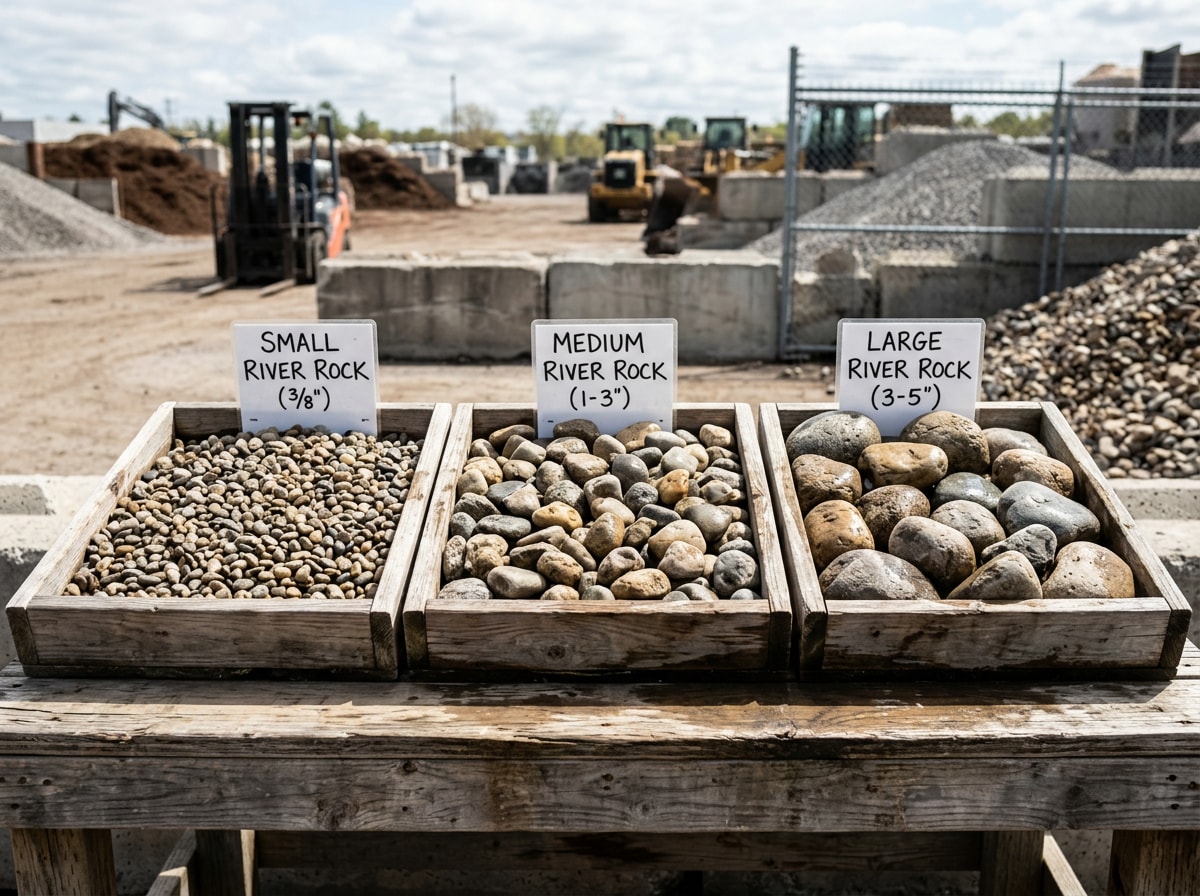
Picking the right size matters more than most homeowners expect. Here's how the common sizes stack up:
| Rock Size | Typical Use | Notes |
|---|---|---|
| 3/8" to 3/4" | Flat beds, walkway edges | Packs tight, stays put, low profile |
| 1" to 3" | Foundation beds, borders | Most popular size, resists scattering |
| 3" to 5" | Dry creek beds, drainage swales | Accent use, individual stones visible |
Multi-colored river jack blends (tan, gray, rust, brown tones) read more naturally against green turf and tropical plantings than a single-color decorative gravel, which can look flat under bright Florida sun.
Borders and transition zones often benefit from a different size than the main bed. Mixing two sizes can define edges without extra edging material. Larger stone also works well framing a fire pit seating area; if that's part of the plan, our fire pit installation page covers how rock and hardscape typically pair together.
If you're unsure which combination fits your yard, a landscaping supply store can usually show samples before you commit to a full order.
Depth, Base Prep and How Much You'll Need
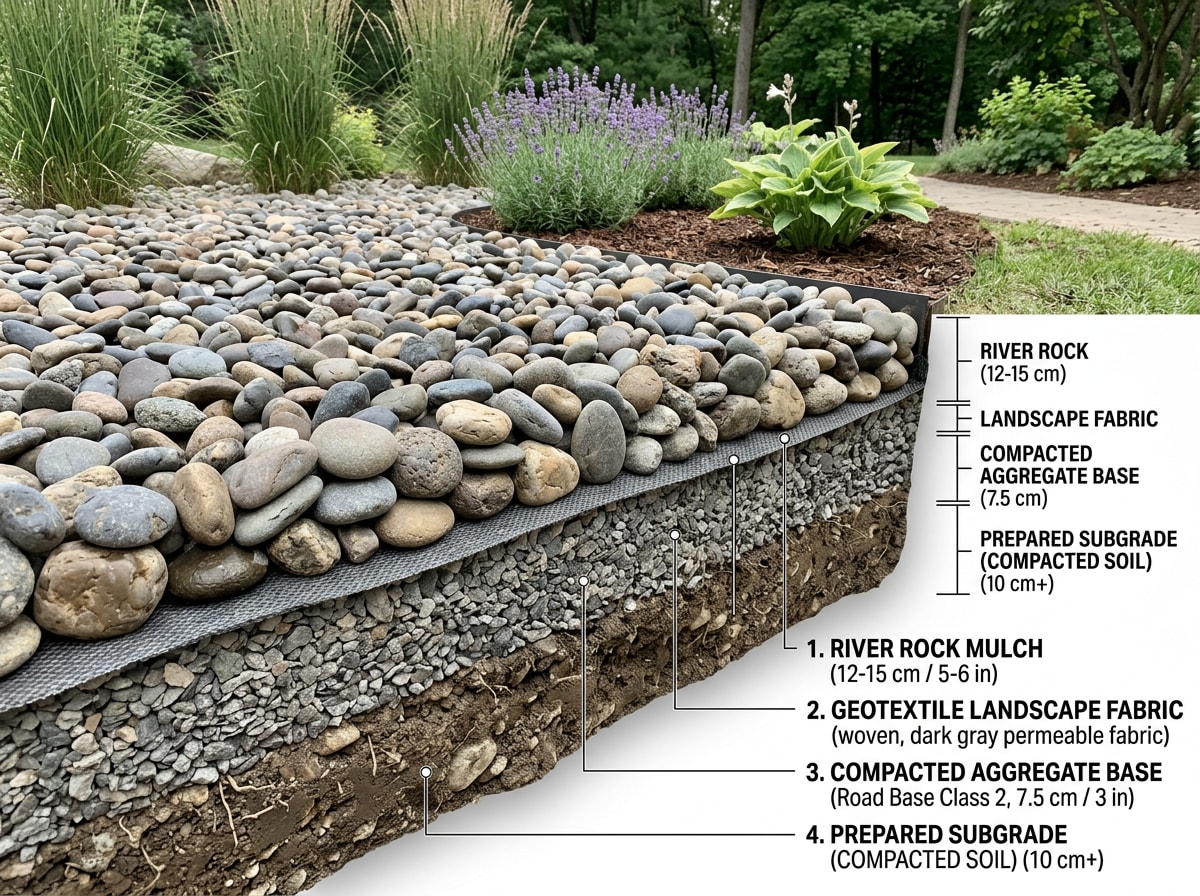
Most river rock beds need 2 to 3 inches of depth over a prepared base. Anything shallower exposes the fabric below. Anything deeper mostly wastes material.
University of Florida's own extension guidance leans cautious on rock as ground cover. Its gardening resource states plainly that rock mulch should be used minimally in the landscape , largely because, as a separate UF/IFAS extension post notes, inorganic mulch can increase soil temperatures and reflective heat on plants, cause soil pH changes that affect nutrient uptake, and doesn't offer the weed suppression or moisture retention that organic mulch does . That's a fair trade-off to understand upfront: river rock buys you durability and drainage, not the soil-building benefits of bark or leaf mulch.
Base preparation is what keeps a bed looking good years later. That means clearing vegetation, grading so water flows away from structures, and compacting the exposed soil before fabric and rock go down. Skipping compaction is a common reason beds develop low spots, especially in Sanford's loose, sandy soil.
Calculating quantity comes down to a coverage formula. UF/IFAS's own mulch math applies the same way to rock: one cubic yard of mulch will cover 324 square feet of ground at 1 inch deep, or 108 square feet at 3 inches deep . Multiply your bed's square footage by the depth you want, convert to cubic yards, then check tons against your supplier's density chart, since river rock runs roughly 1.3 to 1.5 tons per cubic yard. A 100-square-foot bed at 2 inches deep lands a little over half a ton. Most suppliers will run this calculation for you if you give them bed dimensions.
Step-by-Step Installation
Installing river rock yourself is realistic for a weekend DIY project if the bed isn't too large. The sequence matters more than any single step.
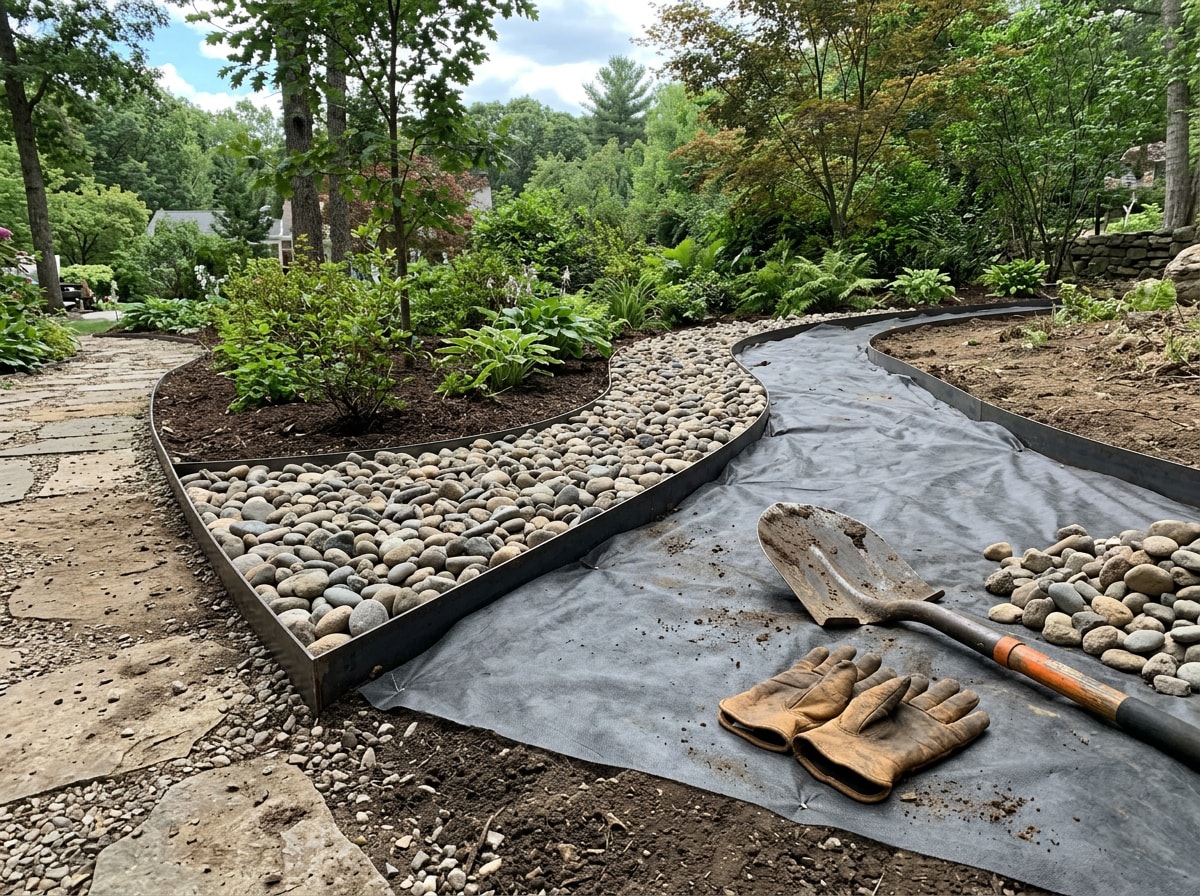
- Clear and grade the area, removing grass, roots, and debris, sloping the soil slightly away from any structure.
- Install edging, metal, plastic, or stone, to create a clean boundary and keep rock from migrating into the lawn or driveway.
- Lay landscape fabric over the compacted soil to block weed growth while still letting water pass through.
- Add a base layer if the design calls for one, particularly on uneven ground or where extra drainage support is needed.
- Spread and level the rock to target depth, working in sections and checking depth as you go.
A few details trip people up. Fabric cut too short at the edges lets weeds sneak through within months. Rock dumped straight from a pile without spreading leaves thin spots that expose the fabric underneath. Take extra time on edging, since a loose or uneven border is the single biggest reason DIY rock beds look unfinished.
For larger beds, sloped yards, or drainage-sensitive areas near a foundation, it's worth getting a quote instead of guessing. Crews working regularly in Sanford, FL already know which base materials hold up in local soil conditions.
Maintenance and the Mistakes That Actually Cause Problems
River rock maintenance is lighter than mulch, but it isn't zero. Plan to rinse off dust and pollen a few times a year. Blow out leaves and debris after storms. Top up any spots that settle, especially near downspouts or high-traffic paths.
The most common mistake isn't skipping maintenance, it's skipping prep. Beds installed without a proper weed barrier look fine for a few months, then sprout weeds through gaps in loose fabric or bare soil. Wrong depth and sloppy edging cause similar long-term headaches.
One mistake shows up every rainy season in Central Florida specifically: rock beds built tight against a foundation without accounting for roof runoff. Water sheets off during a storm, hits the bed, and has nowhere to go. In our own installs across Seminole County yards, this is the single most common callback we get, and it's almost always fixable with a slight grade change planned before installation rather than after.
If drainage is already a known issue on your property rather than a future risk, it's worth reading further than rock alone. For yards with standing water problems, see our Lawn Drainage Service in Sanford, FL guide, or pair your rock bed design with irrigation system maintenance so sprinkler overspray isn't adding to the problem.
Cost and Ordering River Rock in Sanford, FL
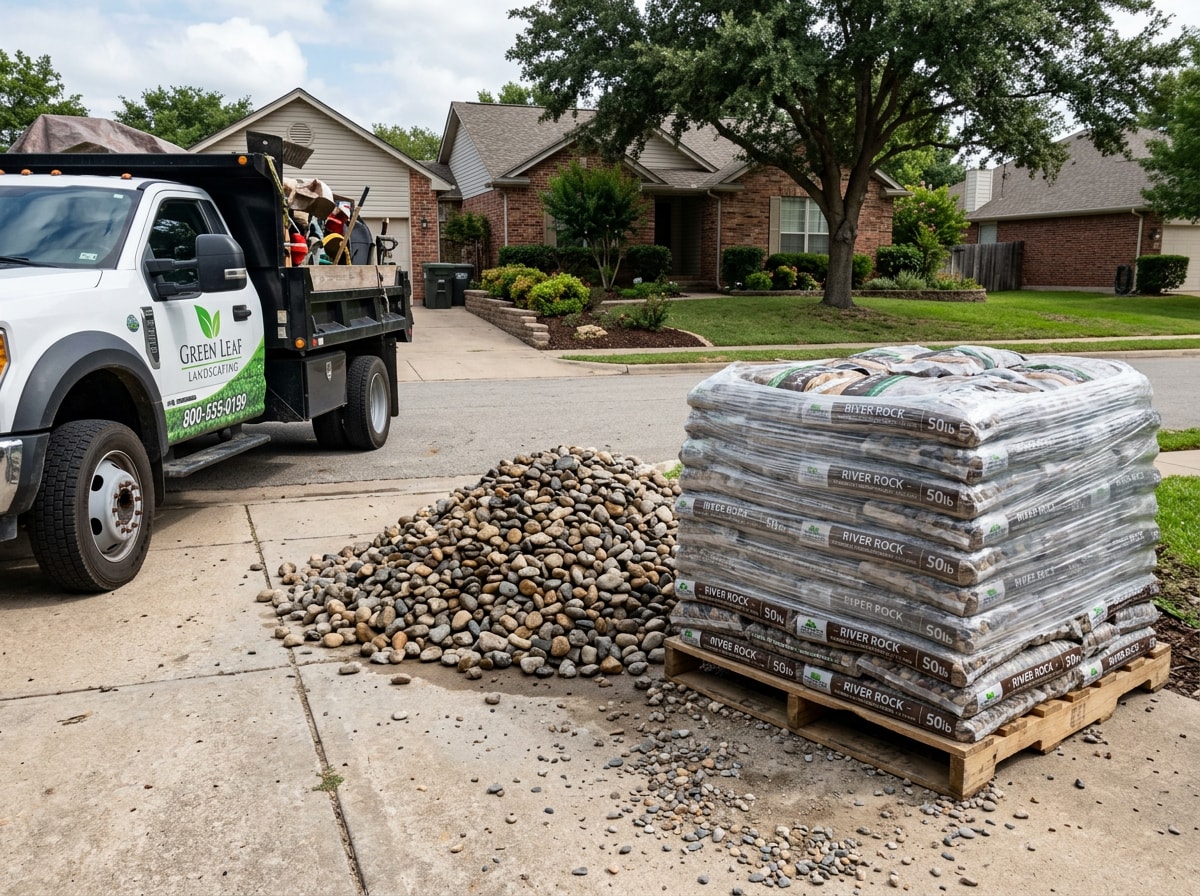
River rock is typically priced by the ton or cubic yard for bulk orders, with bagged options sold per bag at a noticeably higher cost per pound. Bulk versus bagged comes down to project size: bagged rock from a big-box store works for a small accent area, but anything over a few hundred square feet usually costs less, and looks more consistent, ordered in bulk.
Total project cost depends on rock size and color, bed depth, how easy the site is for delivery trucks, and whether labor is included. Larger stone and specialty colors generally cost more per ton than standard multi-colored blends.
Delivery is where local sourcing matters most. Suppliers based near Sanford typically offer shorter lead times and lower delivery fees than ordering from farther away, since river rock is heavy and trucking costs scale with distance. If you're ordering in bulk, call ahead to confirm minimum order amounts and whether delivery includes placement near the work area or just curbside drop-off.
Ready to plan your own project? Reach out for a free estimate and we'll talk through sizing, quantity, and delivery timing for your yard. You can also browse more project ideas on the Deep South Outdoors homepage.
FAQ
What is river rock landscaping?
River rock landscaping uses smooth, naturally rounded stones, rather than crushed stone, pea gravel, or organic mulch, as a decorative, low-maintenance ground cover for beds, borders, and drainage areas. The tumbled shape resists shifting and stays comfortable underfoot.
How much river rock do I need to cover 100 square feet?
For a 100-square-foot bed at the standard 2-inch depth, plan on roughly 0.6 to 0.7 tons of river rock, adjusting slightly for exact stone size and density.
What size river rock is best for landscaping beds?
Most landscaping beds look best with 1- to 3-inch river rock, large enough to stay put and small enough to look refined. Save 3/8-inch stone for borders and tight pathway edges.
Do I need landscape fabric under river rock?
Yes, in nearly every case. Landscape fabric acts as a weed barrier and keeps rock from sinking into soil over time, which is a top reason river rock installations fail early.
Is river rock better than mulch for Florida landscaping?
It depends on the goal. River rock wins on durability and drainage and never needs annual replacement. Organic mulch wins on soil health, since it breaks down and adds nutrients, something rock can't do. Many Sanford yards use both: rock near foundations and drainage paths, mulch around planted beds.
How often does river rock need to be replaced?
Rarely, if ever, for the stone itself. What does need attention over time is the landscape fabric underneath and the depth in high-traffic or runoff areas, which can settle and need topping off every few years.
Does Home Depot sell river rock?
Big-box stores sell bagged river rock in limited colors and sizes, fine for small accents. Larger bulk-versus-bagged projects are usually cheaper and more consistent through a local supplier.