Lawn treatments in Lake Nona, FL have to solve a problem most national lawn programs ignore: sandy, fast-draining soil paired with a legal fertilizer blackout every summer. Get the timing wrong and you either starve the lawn in spring or feed an algae bloom in the lake behind your house. This guide breaks down what actually goes into a Lake Nona treatment plan, season by season, so you're not guessing.
Why Lake Nona Lawns Need a Different Treatment Plan
Most Lake Nona yards sit on sandy soil that drains quickly and holds onto very few nutrients, which is exactly why generic "feed and forget" programs underperform here. Add in near-daily summer storms and you get a lawn that can go from thick and green to thin and weedy in a matter of weeks if treatments aren't timed to the season.
Lake Nona is also inside Orange County, which runs one of the strictest fertilizer ordinances in Central Florida. During the summer blackout, no fertilizer containing nitrogen or phosphorus may be applied in Orange County from June 1 through September 30 . The rest of the year comes with its own rules: if fertilizer with nitrogen is used, at least 65% of the nitrogen must be slow-release type, no more than 1 pound of total nitrogen may be applied per 1,000 square feet, and no lawn may receive more than 3 pounds of total nitrogen per 1,000 square feet per year . Applications also have to stay clear of water: no fertilizer can be applied within 25 feet from waterways — a rule that matters a lot in a community built around ponds and conservation areas.
Most Lake Nona lawns are St. Augustinegrass, with some zoysia on estate and golf-course-adjacent lots. St. Augustine handles heat well but is thin-bladed enough that over-fertilizing it backfires in a way most homeowners don't expect, which we'll get to below.
Explore our lawn maintenance services to see how a tailored plan fits your yard.
Core Lawn Treatments for Lake Nona Yards
A complete program is really a handful of treatments layered on top of each other, each solving a different problem.
- Fertilization — Feeds the lawn outside the blackout window using slow-release nitrogen so sandy soil doesn't leach it out in the first hard rain.
- Weed control — Pre-emergent herbicide stops crabgrass and sedge before they germinate; post-emergent spot-treats what's already up.
- Grub and insect control — Targets chinch bugs, sod webworms, and white grubs before brown patches spread.
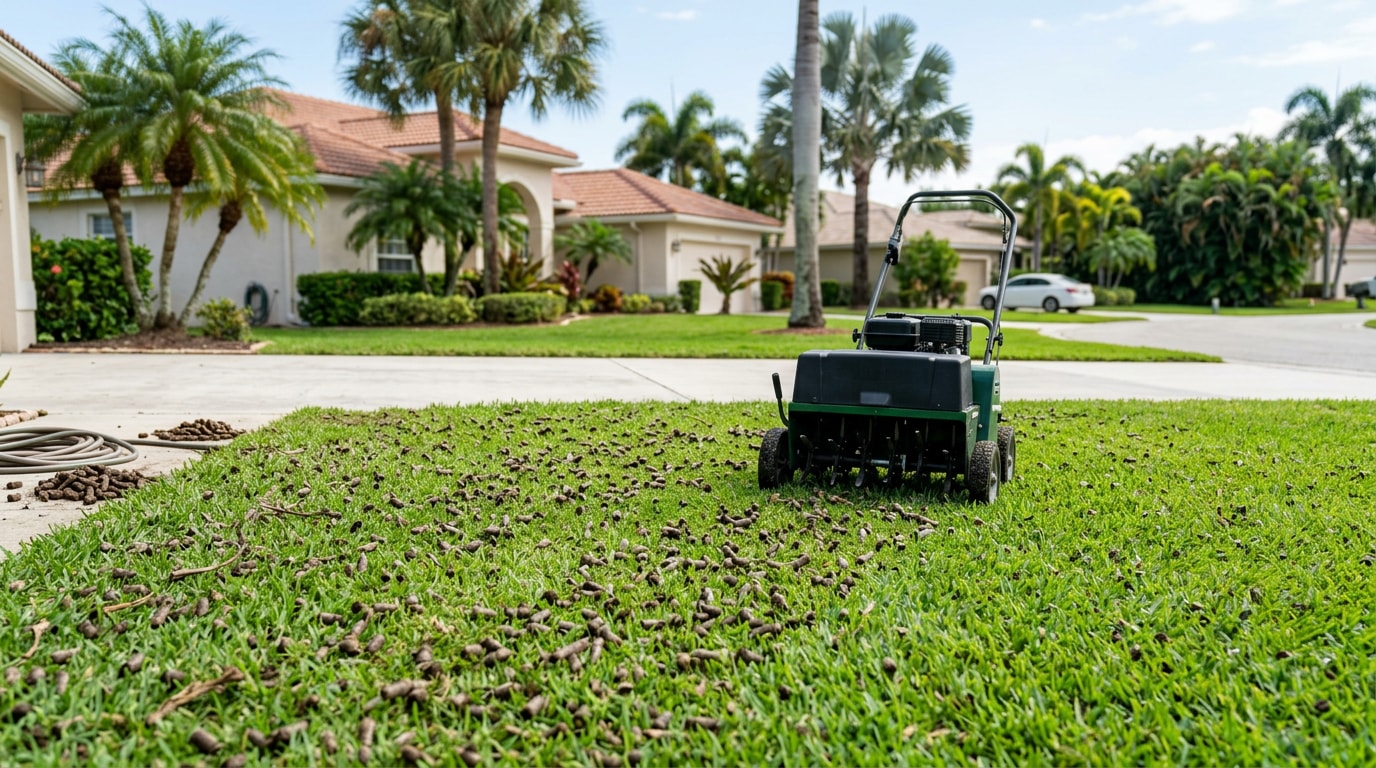
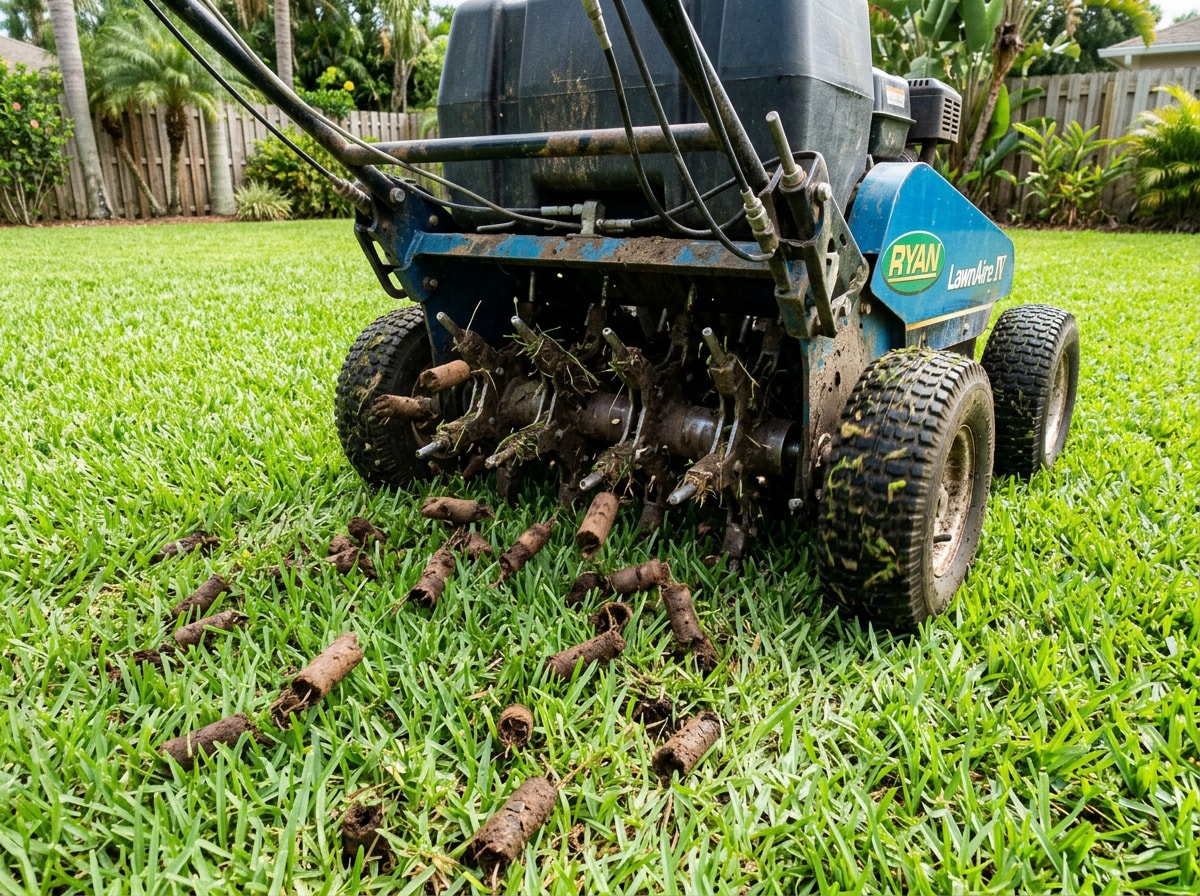
- Core aeration — Pulls plugs of compacted soil so water, air, and nutrients actually reach the root zone instead of running off.
- Disease management — Identifies and treats fungal issues like large patch and gray leaf spot before they take over a damp lawn.
- Mosquito and tick barrier — A separate outdoor pest treatment that targets standing-water breeders around the yard.
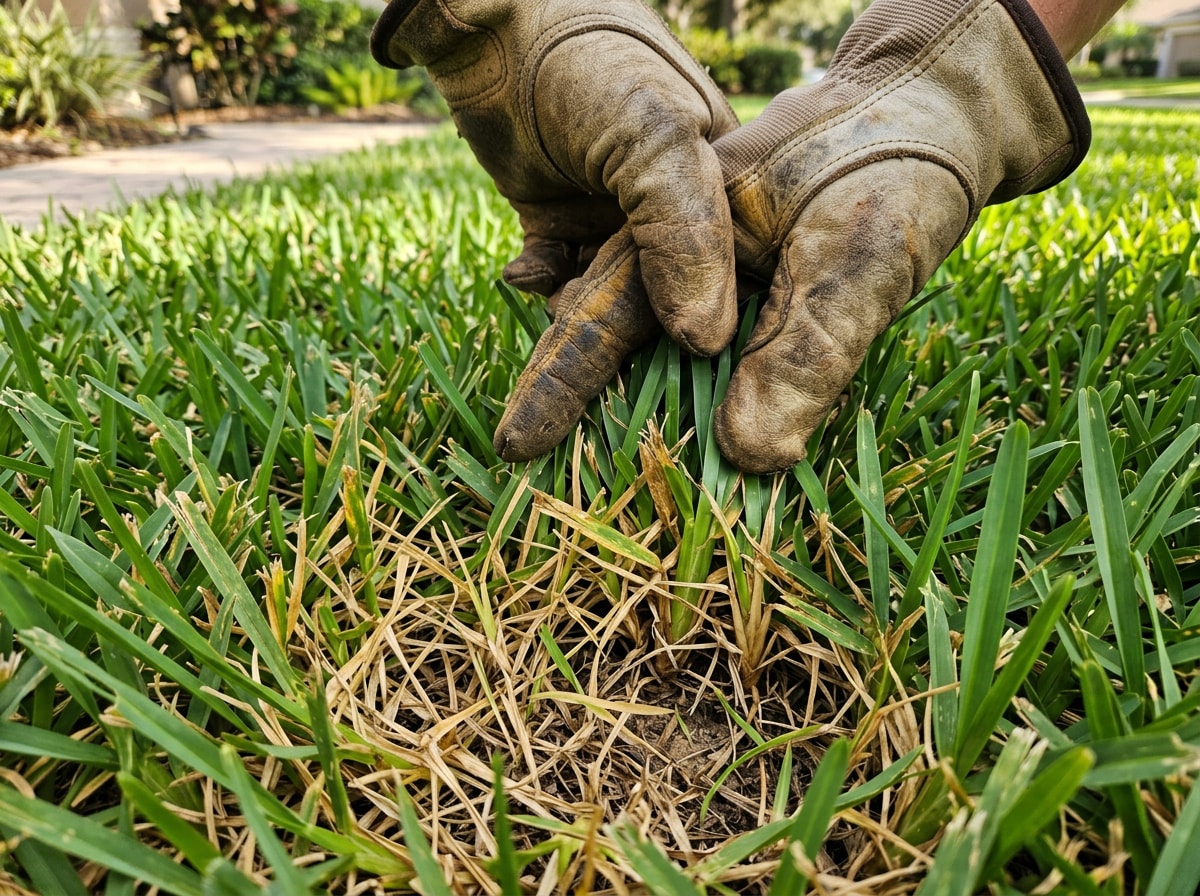
Here's the part most lawn programs skip: St. Augustinegrass's single biggest insect threat is directly tied to how it's fertilized. The major insect pest of St. Augustinegrass is the southern chinch bug (Blissus insularis Barber), which can cause considerable damage if not treated . A University of Florida entomology study found something counterintuitive: repeatedly using large amounts of nitrogen fertilizer can ignite a population explosion of Southern chinch bugs, the No. 1 insect pest of St. Augustinegrass . In other words, over-fertilizing to chase a greener lawn can directly cause the pest problem you're trying to avoid. UF/IFAS recommends homeowners check for chinch bugs early: check for chinch bugs by removing the ends of a coffee can, inserting one end into the soil at the margin of suspected damaged areas, and filling it with water — chinch bugs will float to the water surface within 5 minutes .
A Lake Nona Lawn Treatment Calendar
Timing drives results more than product choice does. Here's roughly how a season should break down for a typical Lake Nona lawn.
| Season | Primary Treatments | Why It's Timed This Way |
|---|---|---|
| Spring (Mar–May) | Pre-emergent weed control, first nitrogen feeding, core aeration | Last window to feed before the summer blackout; aeration recovers fastest in warming soil |
| Summer (Jun–Sep) | Iron/micronutrient greenup, chinch bug and grub monitoring, mosquito control | Nitrogen and phosphorus are legally restricted; heat and rain drive pest pressure |
| Fall (Oct–Nov) | Final nitrogen feeding, post-emergent weed cleanup | Last feeding before dormancy; weeds that germinated over summer get knocked back |
| Winter (Dec–Feb) | Minimal fertilization, dormant-season weed prevention | Grass is semi-dormant; over-treating now wastes product |
During the summer blackout, don't assume the lawn has to look pale. For a quick summer greenup, use iron supplements (ferrous sulfate or chelated iron) on your turf instead of nitrogen fertilizer — it's legal year-round and won't feed the chinch bug population the way nitrogen can.
What a Lawn Treatment Visit Actually Includes
Starting service with a local provider usually follows the same basic sequence, whether it's a first-time call or a seasonal checkup.
- Request a quote. A free estimate request takes a few minutes and leads to a scheduled yard visit.
- On-site lawn analysis. A technician checks soil condition, grass type, irrigation coverage, and problem areas before recommending anything.
- Custom treatment plan. The analysis determines product selection, application timing, and how often visits are needed for your specific lot.
- Ongoing servicing. Scheduled visits continue through the year, with adjustments as the lawn responds and seasons change.
If your lawn is newer or patchy enough that treatments alone won't fix it, sod installation combined with a proper establishment watering schedule is usually faster than trying to nurse thin turf back with fertilizer alone. And if brown patches keep returning in the same spots regardless of treatment, check irrigation coverage first — uneven watering causes a lot of the "disease" calls we actually end up diagnosing as dry spots or overwatered low points. Our irrigation system maintenance service catches that kind of issue before it shows up as a lawn problem.
Budgeting for Lake Nona Lawn Treatments
Cost depends on lot size, grass condition, and how many services are bundled together — a standalone weed control visit costs far less than a full annual program covering fertilization, pest control, disease management, and aeration. If your lawn is part of a larger yard overhaul, it helps to budget the whole project together rather than piecing it out; our Backyard Landscaping Cost in Lake Nona, FL guide breaks down what homeowners are actually spending on turf, beds, and hardscape in 2026. For supplies like mulch, soil amendments, or sod between scheduled treatments, our landscaping supply store carries what local lawns need.
We work lawns across Lake Nona's established neighborhoods and new-build sections alike, and the pattern holds everywhere: lawns on a consistent, season-timed program need far fewer emergency visits than lawns treated reactively after problems already show. Request a free lawn quote and we'll walk your yard before recommending anything.
FAQ
How often should a lawn be treated in Lake Nona, FL?
Most programs run 6 to 8 visits per year: fertilization in spring and fall, iron or micronutrient applications through summer, plus ongoing weed and pest monitoring year-round. Aeration is typically done once annually, in spring.
What is the Orange County fertilizer blackout period?
No fertilizer containing nitrogen or phosphorus may be applied in Orange County from June 1 through September 30 . Outside that window, nitrogen applications are still capped and must be mostly slow-release.
What grass type do most Lake Nona lawns have, and what's its biggest threat?
St. Augustinegrass is the dominant lawn grass in Lake Nona. The major insect pest of St. Augustinegrass is the southern chinch bug, which can cause considerable damage if not treated , and overfeeding with nitrogen can make infestations worse rather than better.
Do lawn treatments help with mosquitoes too?
Not directly. Mosquito control is a separate barrier treatment, but lawn care habits matter: once a week, empty and scrub, turn over, cover, or throw out any items that hold water like buckets, planters, flowerpot saucers, or trash containers to cut down breeding sites between treatments.
Is it against the law to not mow your lawn in Lake Nona?
Many municipalities and HOAs enforce overgrown lawn ordinances through code enforcement, and Lake Nona's HOA communities typically have their own standards on top of county code. Check your specific HOA and county rules, since requirements vary. See our Lake Nona service area page to confirm coverage for your address.
Can I just skip fertilizing and only mow?
You can, but sandy Central Florida soil loses nutrients fast, so an unfertilized lawn in Lake Nona typically thins out and opens the door to weeds within one or two growing seasons. A minimal program (iron in summer, nitrogen in spring and fall) keeps turf viable without heavy input.
Ready to put your lawn on a program built for Lake Nona's soil, grass, and ordinance? Get your free estimate and visit the Deep South Outdoors FL homepage to see our full service lineup.