A hardscaping contractor in Central Florida, FL has to fight sandy soil, flat lots, and summer downpours that expose bad workmanship within a single rainy season. This guide breaks down what a hardscape contractor actually does, where paver patios and driveways fail locally, and what a fair project should cost in 2026. Read it before you sign anything.
What a Hardscaping Contractor Actually Does
Hardscaping covers the built, non-living parts of a yard: driveways, patios, retaining walls, fire features, and outdoor kitchens. A hardscape contractor handles the excavation, base compaction, drainage, and material installation underneath those surfaces, not just the pavers you see on top.
That's a different skill set than a landscaper who focuses on plants, sod, and irrigation. Many Central Florida homeowners end up hiring both, but the hardscape work has to go in first since it sets the grading and drainage the rest of the yard depends on.
We cover softscape, irrigation, and outdoor structures too. Browse the full range of landscaping and hardscaping services for context while you read.
What to Demand From Any Hardscape Contractor
Before comparing prices, compare standards. This checklist applies whether you're getting three quotes or one.
- License and insurance, verified. Florida requires contractors performing this type of work to hold an appropriate license classification, and unlicensed work can leave you liable for job-site injuries or code violations. Don't take a contractor's word for it. Florida's Department of Business and Professional Regulation runs a public license verification portal where you can confirm license status, classification, and disciplinary history in minutes.
- A written process. Design approval, a written scope of work, a payment schedule, estimated start and completion dates, and a final walkthrough should all exist on paper before a shovel hits the ground.
- A specific warranty. A vague "satisfaction guarantee" means little. A real warranty spells out what's covered (materials, labor, settling, drainage) and for how long. Get the paver installation warranty in writing and read what's excluded before you sign.
The Concrete Masonry & Hardscapes Association, the national trade group for the paver and hardscape industry, publishes a contractor hiring guide that walks through most of this in more depth if you want a second opinion before signing.
Where Hardscape Projects Go Wrong in Central Florida
Sandy soil and seasonal downpours expose weak workmanship fast here. Across the service calls we run in Orlando, Lake Mary, Oviedo, and the surrounding suburbs, nearly every repair traces back to one of two root causes, and neither is a material defect.
The Base Was Never the Priority
Proper base preparation, meaning the right depth, the right aggregate, and real compaction, is what keeps pavers from shifting or sinking. Skipping compaction or using the wrong base material is the single most common failure cause in this region. It usually doesn't show up until months after installation, once a few heavy rains and a summer of heat have worked on it.
Drainage Was Nobody's Job
Poor grading creates standing water, soil erosion, and eventual paver movement once wet-season rainfall volumes spike. A patio sloped toward a home's foundation instead of away from it can turn a minor oversight into repeated flooding within a single season.
University of Florida IFAS Extension's technical guidance on permeable pavement systems is a useful reference here: it covers how base depth, soil infiltration rate, and separation from the seasonal high water table all affect whether a paved surface drains the way it's supposed to. A contractor who can't speak to those factors on your lot is guessing.
Fixing bad drainage after the fact usually means regrading the base and adding a drainage channel or permeable joint sand before repaving. Catch it early and it's a straightforward correction.
Request a free estimate if your current patio or driveway is already holding water. We'll tell you whether it's a regrade or a full rebuild before we quote anything.
Hardscaping Services to Expect
Most Central Florida homeowners need one of three project types: functional surfaces, outdoor living spaces, or added features. Here's what each typically involves.
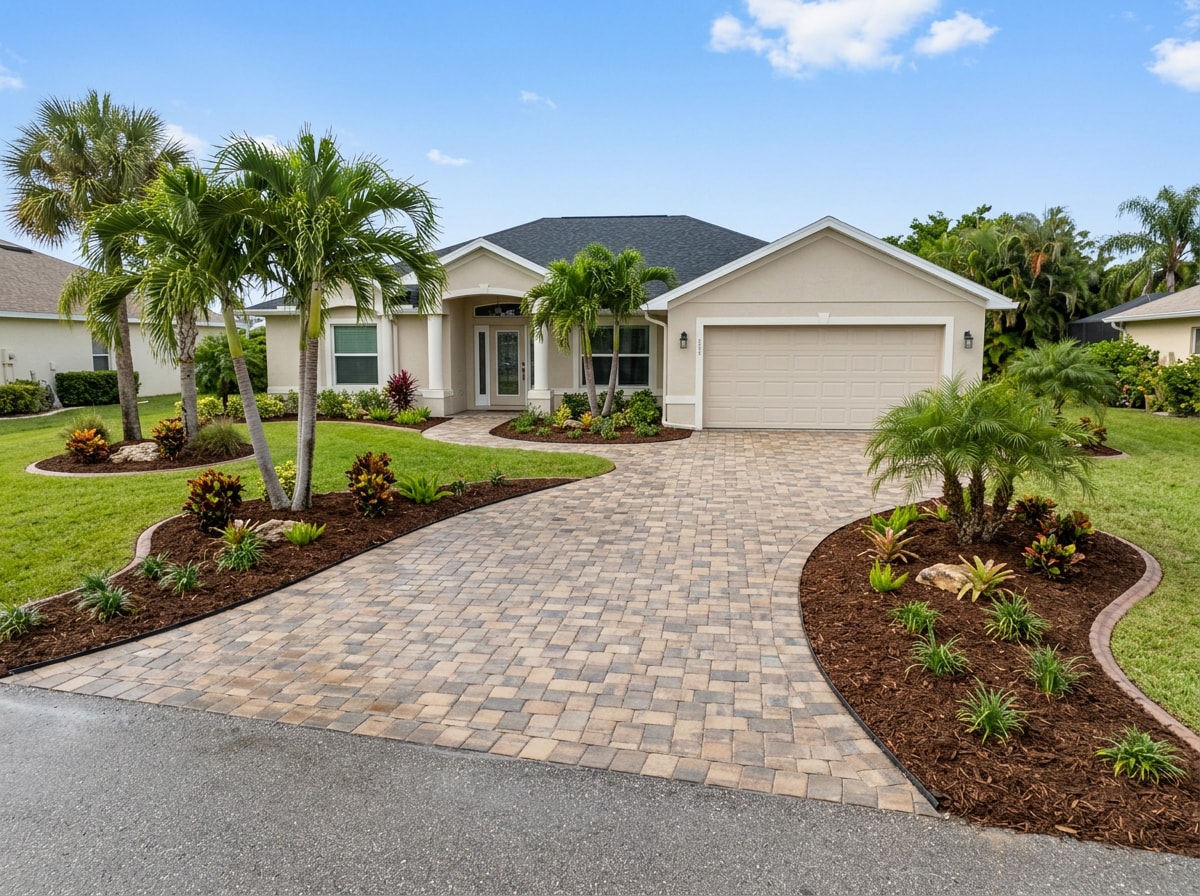
Driveways & Walkways
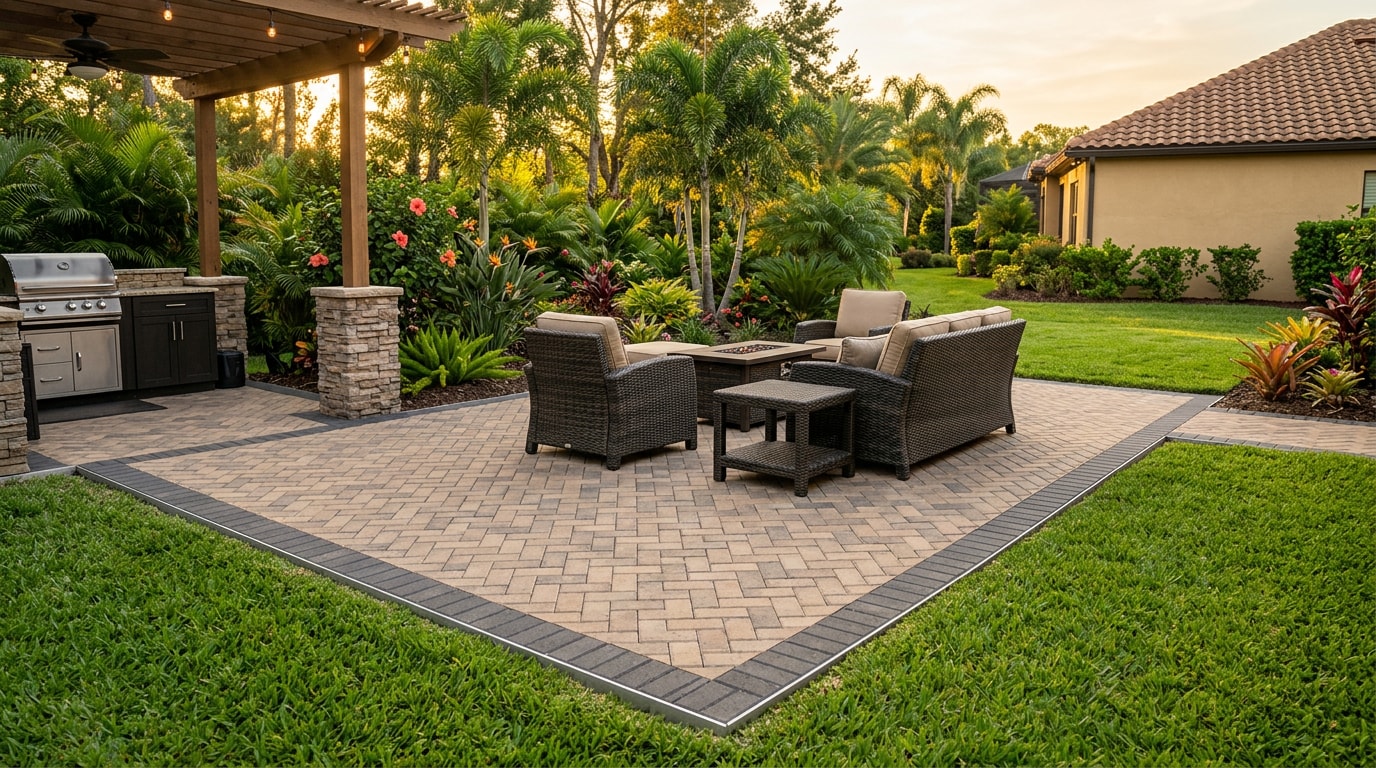
A paver driveway or walkway can use concrete pavers, brick, or natural stone, each with different cost and maintenance trade-offs. In this climate, base work and joint sand matter more than material choice for long-term performance. Even a premium paver fails without it.
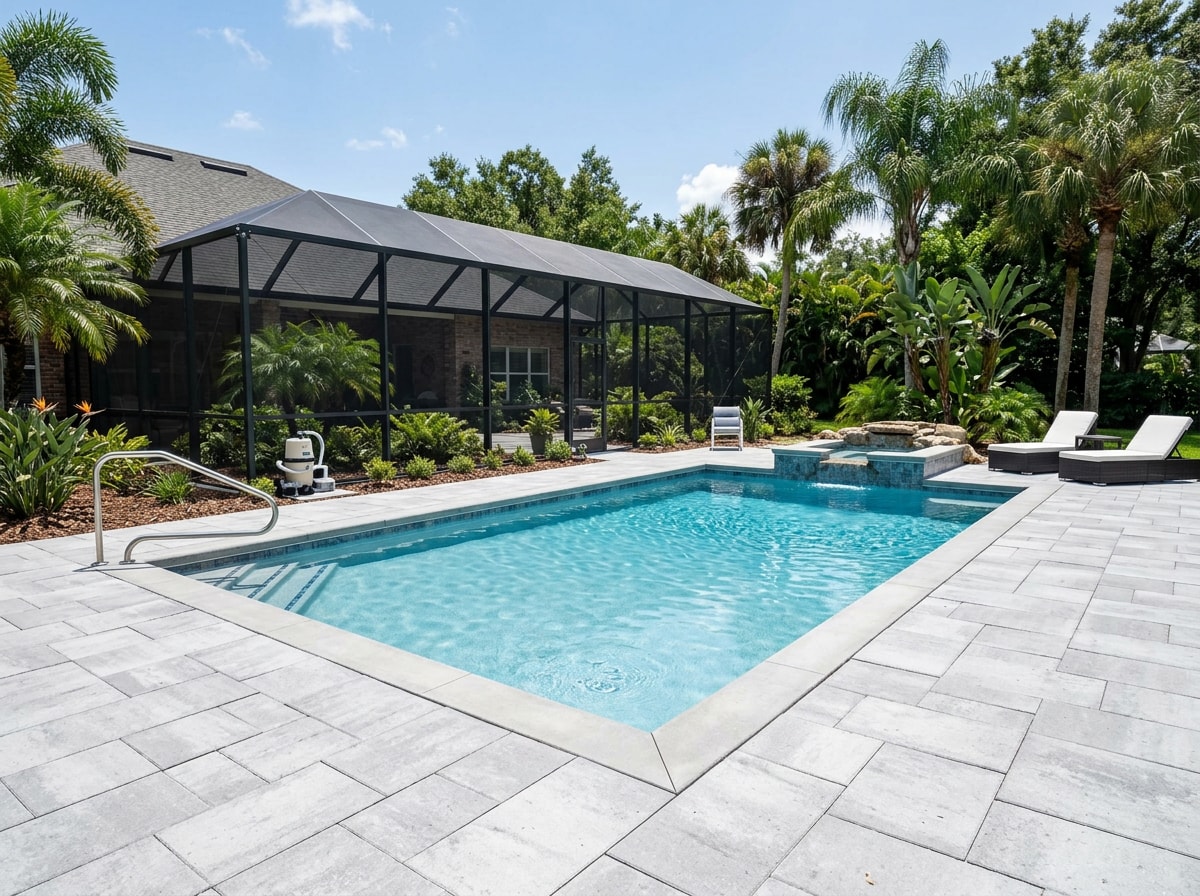
Patios & Pool Decks
Pool deck pavers need slip resistance and heat management, since bare feet and 95-degree afternoons don't mix well with dark concrete. Cool-touch pavers stay noticeably cooler underfoot, which is worth the upcharge on most patio projects near a pool.
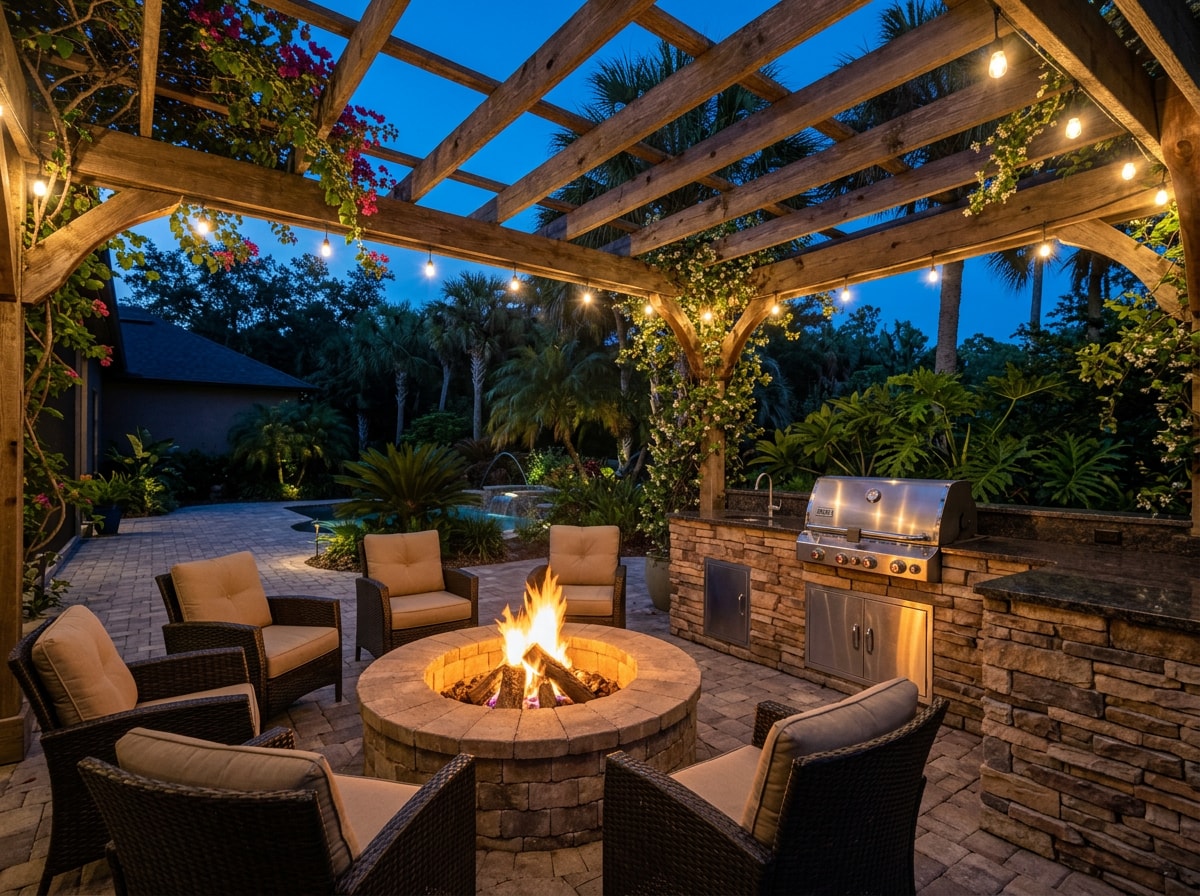
Fire Pits, Fireplaces & Outdoor Kitchens
Fire pit and outdoor kitchen projects involve more planning than they look like they should. Gas lines, clearance from structures, and local permitting all come into play. A qualified contractor handles permitting and placement as part of the quote, not as a surprise add-on later. A pergola over the same space adds shade without blocking the layout.
What Hardscaping Costs in Central Florida
Pricing depends on square footage, material choice, site access, and how much grading or drainage work the lot needs. The ranges below are typical for installed paver work; expect the high end when a site needs extra excavation, a steep grade, or drainage correction.
| Project Type | Typical Installed Range | Main Cost Drivers |
|---|---|---|
| Paver walkway | Lower end per sq ft | Width, curves, edge restraint |
| Paver patio | Mid-range per sq ft | Pattern complexity, base depth |
| Paver driveway | Higher end per sq ft | Thicker base for vehicle load |
| Retaining wall | Priced per face sq ft | Wall height, engineering needs |
| Fire pit or outdoor kitchen | Priced per project | Gas lines, utilities, permitting |
Full outdoor living builds that combine several of these run well past what any single line item suggests. Many contractors offer monthly payment plans to spread that cost over time, and discount programs for veterans and military families are common. Ask every contractor you're comparing whether one applies before you commit.
The Same Six Steps, Every Project
A reliable hardscaping project runs through six consistent stages. If a sales call skips straight from a phone quote to a crew showing up, with no design review and no written scope, that's a sign the structure isn't there.
- Initial consultation to walk the site and discuss goals.
- Design and material selection, including drainage and grading review.
- Written proposal and contract with a payment schedule and timeline.
- Scheduling, factoring in permits and material lead times.
- Installation, with base compaction and grading done before pavers go down.
- Final walkthrough to confirm the finished work matches the contract.
A contractor who walks you through all six steps before asking for a signature is managing the project, not just booking it.
Central Florida Communities We Serve
Soil and drainage conditions are similar across the Orlando metro, which is why the vetting standards above apply no matter which suburb you're in. We work throughout Orlando, Windermere, Lake Nona, Winter Park, Lake Mary, Sanford, Oviedo, and the broader Central Florida region.
If you're comparing bids for a Lake Mary project specifically, our guide on hiring hardscapers in Lake Mary breaks down local pricing and vetting questions in more detail.
FAQ
What's the difference between a hardscape contractor and a landscaper?
A hardscape contractor builds the hard, permanent structures: patios, driveways, walls, and fire features, along with the excavation, base, and drainage underneath. A landscaper typically handles plants, sod, and irrigation. Many projects need both, usually with hardscape going in first.
Do I need a permit for a patio, driveway, or fire pit in Central Florida?
Often, yes. Permit requirements vary by county and city, and they're more likely to apply to structures over a certain size, gas-fired features, or anything attached to the home. A licensed contractor should handle permitting as part of the project, not leave it to you.
How much does hardscaping cost in Central Florida?
Cost depends on square footage, material, site access, and drainage work needed. Walkways run cheaper per square foot than driveways, since driveways need a thicker compacted base to handle vehicle weight. Get an itemized quote so you can see exactly what's driving the price.
How long will my hardscaping project take?
A small walkway might take two to three days. A full patio or driveway can run one to two weeks. Weather delays, permitting, and material lead times are the main factors that stretch a timeline beyond the initial estimate.
Do you handle both residential and commercial hardscape projects?
Residential and commercial hardscaping differ mainly in scale, material specification, and permitting requirements. Commercial work often involves stricter ADA and drainage code compliance, while residential projects focus more on design and everyday durability.
What areas do you serve?
We cover Orlando and the surrounding Central Florida suburbs, including Windermere, Lake Nona, Winter Park, Lake Mary, Sanford, and Oviedo. Confirm your address falls within range, then request a free estimate to get a written, itemized quote.