Black stones for landscaping Winter Park, FL homeowners install most often fall into three categories: lava rock, polished pebbles, and dense accent stone like basalt or slate. Each one solves a different yard problem, from drainage under a downspout to a sharp border along a paver walkway. Here's what each type actually does once it's in the ground, what it costs, and where local buyers tend to go wrong.
Why Black Stone Works for Winter Park Yards
Homeowners across Central Florida keep swapping mulch beds for dark stone. The draw isn't just the look — it's fewer weekends spent on upkeep.
Bold Contrast Against Florida Greenery
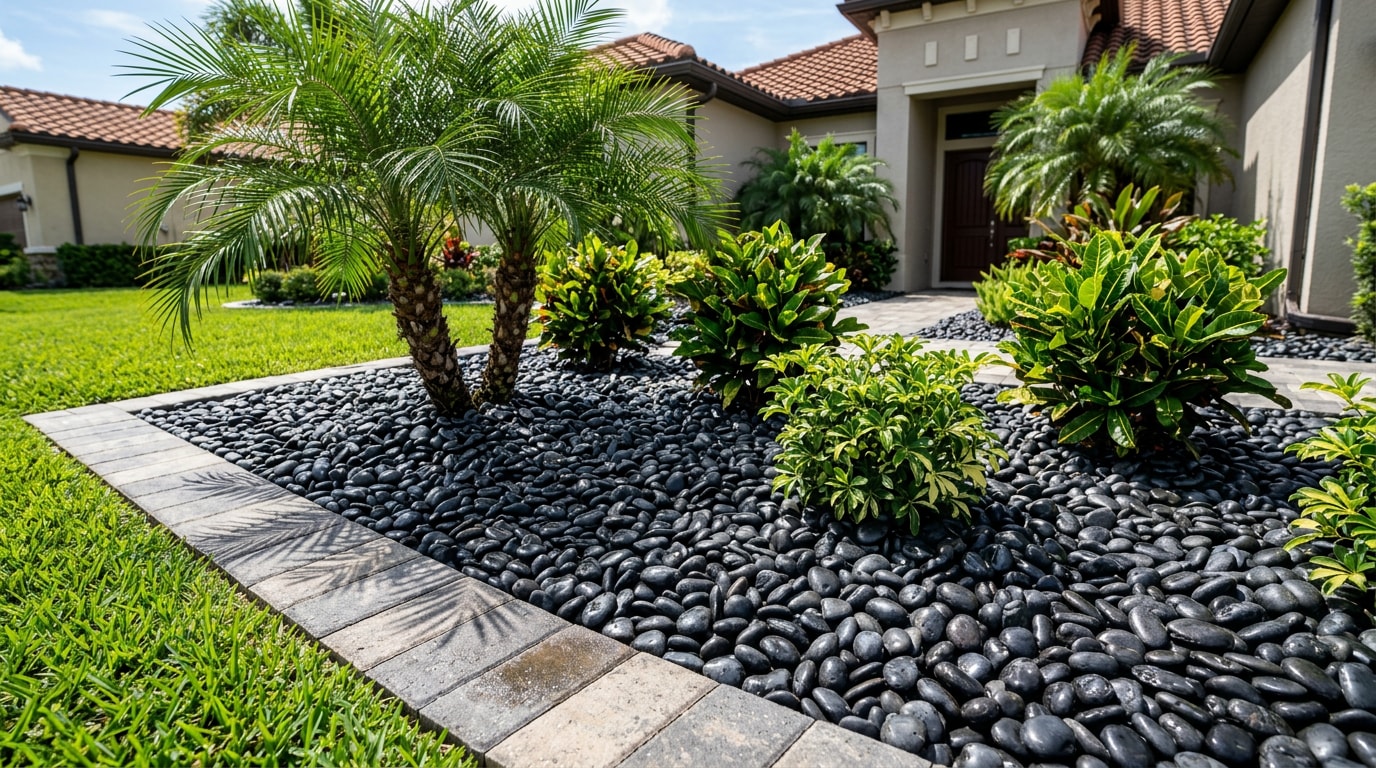
Black stone creates sharp contrast against green lawns, tropical foliage, and bright flowering plants common in Winter Park landscapes. It reads as a deliberate design choice, not filler. Designers often use it as a dark frame that makes everything planted inside it pop, whether the style is tropical, modern, or traditional Florida cottage.
Low Maintenance, No Replacement Cycle
Unlike mulch, black stone doesn't decompose, fade from UV exposure the way dyed bark does, or need yearly top-offs. It holds its shape and color for years once it's down. For busy homeowners, that durability means real time saved compared to a mulch cycle.
Better Drainage in the Rainy Season
Black stone lets rainwater filter straight through to the soil instead of pooling on top. That matters in a region where summer storms can dump inches of rain in an afternoon. A regraded bed with a gravel base under the stone drains in minutes instead of staying soggy for days. On our own installs, beds near downspouts that get this treatment stop puddling almost immediately after a storm, where the old mulched bed would stay wet into the next day.
Florida's own cooperative extension program backs this up on a bigger scale: Florida's waterways are vulnerable to everything put on home landscapes, and fertilizers, pesticides, landscape debris, and eroded soil can wreak havoc on water quality. Permeable groundcover, including stone, is part of how UF/IFAS recommends managing that runoff. If you're planning drainage upgrades alongside the stone, our irrigation equipment supplier team can regrade and tie the bed into your existing system.
Types of Black Landscaping Rock
"Black stone" isn't one product. It's a category covering several materials with different textures, weights, and uses.
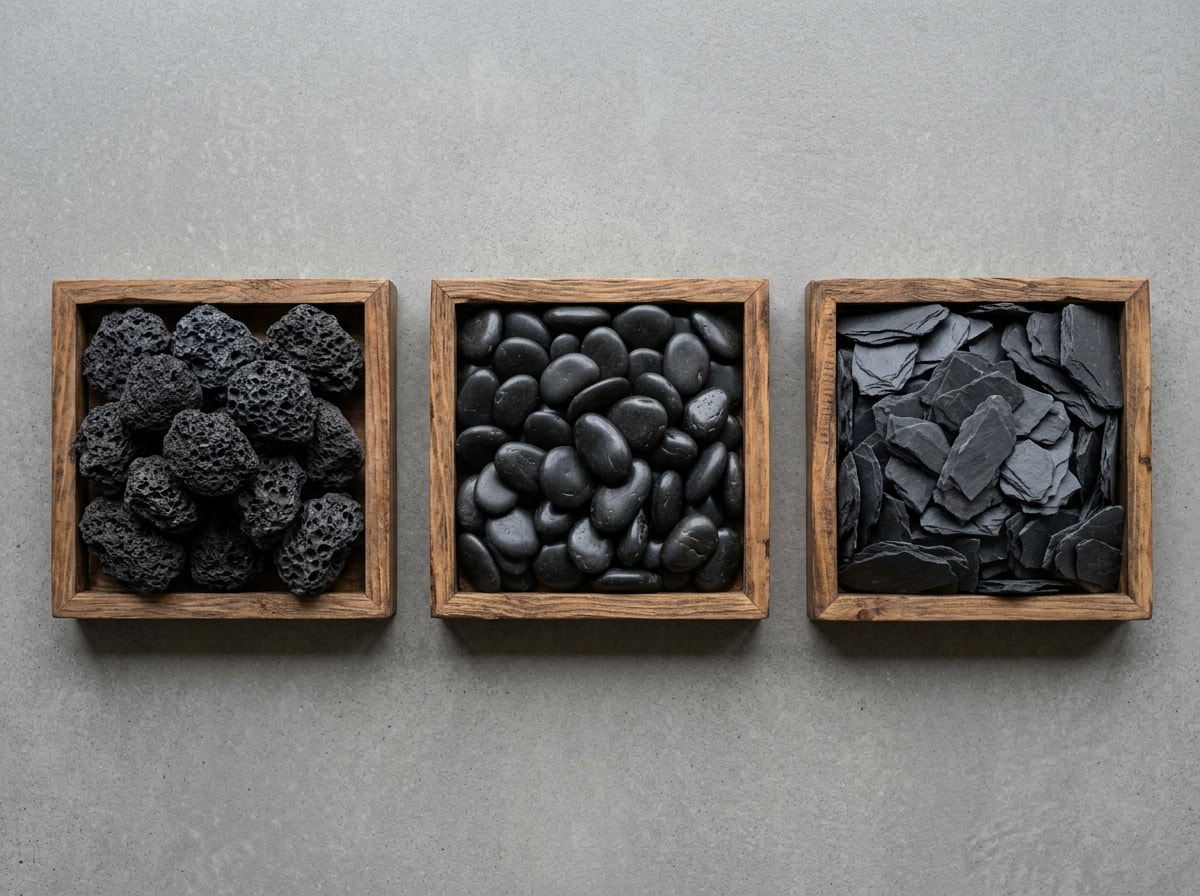
| Type | Texture | Typical Size | Best For | Watch Out For |
|---|---|---|---|---|
| Black Lava Rock | Porous, rough, matte | 3/4"–2" | Fire pit surrounds, succulent beds, drainage areas | Sharp edges on bare feet; can fade |
| Polished Black Pebbles / River Rock | Smooth, rounded | 3/4"–3" | Water features, walkways, bed borders | Can roll or shift on slopes |
| Black Basalt / Slate Chips | Angular, flat, dense | 1/2"–1.5" | Modern beds, architectural edging | Costs more; shows dust on light-colored stone |
| Obsidian | Glassy, reflective | Varies | Upscale accent areas | Most expensive; can scratch |
Black Lava Rock
Black lava rock is porous, lightweight, and heat-tolerant, which makes it a common pick for garden beds, fire pit surrounds, and minimalist-themed yards. Its rough, pitted texture reads more casual than polished stone. It gets that texture because it's an extrusive igneous rock: extrusive, or volcanic, igneous rock is produced when magma exits and cools above the Earth's surface, cooling and solidifying almost instantly when it is exposed to the atmosphere. Those trapped gas pockets are what make a scoop of lava rock so much lighter than the same scoop of solid stone.
Polished Black Pebbles & River Stones
Polished black pebbles and river stones are smooth, rounded, and water-feature-friendly, typically sold in sizes from about ¾ inch up to 3 inches. Most suppliers recommend a 2-inch bed depth, which covers soil well without wasting material. The rounded shape is comfortable underfoot, which is why they show up so often around ponds, fountains, and walking paths. Smaller sizes suit potted plants; larger ones hold up better in open beds exposed to wind and rain.
Black Basalt, Slate Chips & Obsidian
These three denser, more angular options serve a different purpose than lava rock or pebbles. Black basalt is prized for durability and a polished, architectural finish. Slate chips are flat and sleek, suited to modern garden designs. Obsidian carries a glass-like sheen that reads as upscale, though it costs more and shows dust more easily than the other two. Want to see these paired with a walkway? Our paver installation team can lay the hardscape first so the stone border sits flush and doesn't migrate.
What Black Landscaping Rock Costs
Bulk black stone is usually priced by the ton, and price scales with how processed the stone is. As a reference point, one Midwest supplier lists a dense, angular black landscape stone around 1½ inches in diameter, sold in bulk by the ton, at roughly $138. Rougher lava rock tends to run cheaper per ton than polished pebbles, basalt, or obsidian, since polishing and sorting add labor cost. Expect local Central Florida pricing to vary by supplier, delivery distance, and how much you're ordering.
A few things that change your total:
- Bed depth. A 2-inch layer uses less material than a 3-inch layer but offers less weed suppression.
- Delivery vs. pickup. Bulk delivery saves truck trips but adds a delivery fee on smaller orders.
- Base prep. Beds that need regrading or a weed barrier add labor cost before the stone ever goes down.
If you'd rather compare against organic mulch pricing before deciding, our Mulch Yard Sanford, FL bulk mulch guide breaks down current bulk mulch costs and delivery minimums for the same general service area.
Is Black Stone "Florida-Friendly"? What UF/IFAS Actually Says
Here's something most black-stone sellers won't tell you: Florida's own extension program doesn't fully endorse rock as a plant-bed mulch. A UF/IFAS horticulture post on sustainable landscaping is direct about it, advising homeowners to finish plant beds with Florida-Friendly mulches made from organic materials, not stones or shells, because rock mulches don't add organic matter back to the soil.
That doesn't mean skip black stone entirely. It means use it where its strengths matter most: walkways, borders, fire pit rings, and water features, rather than as a blanket replacement for mulch under every shrub and perennial. Mixing zones, organic mulch close to root systems and stone along hardscape edges, gets you the low-maintenance look without working against UF/IFAS guidance.
Ideas for Using Black Rock in Your Yard
Black rock works well in three common applications:
- Pathways — a winding walkway lined with black stone against green grass holds a crisp edge year-round.
- Bed borders — used as a mulch alternative around plant beds, it suppresses weeds with a more sophisticated look than bark.
- Focal points — a ring of black stone around a specimen palm or sculptural agave turns that plant into a clear centerpiece instead of letting it blend into the bed.
If you're planning a fire feature to pair with lava rock, see our fire pit installation page for layout options that work with Winter Park's HOA setback rules.
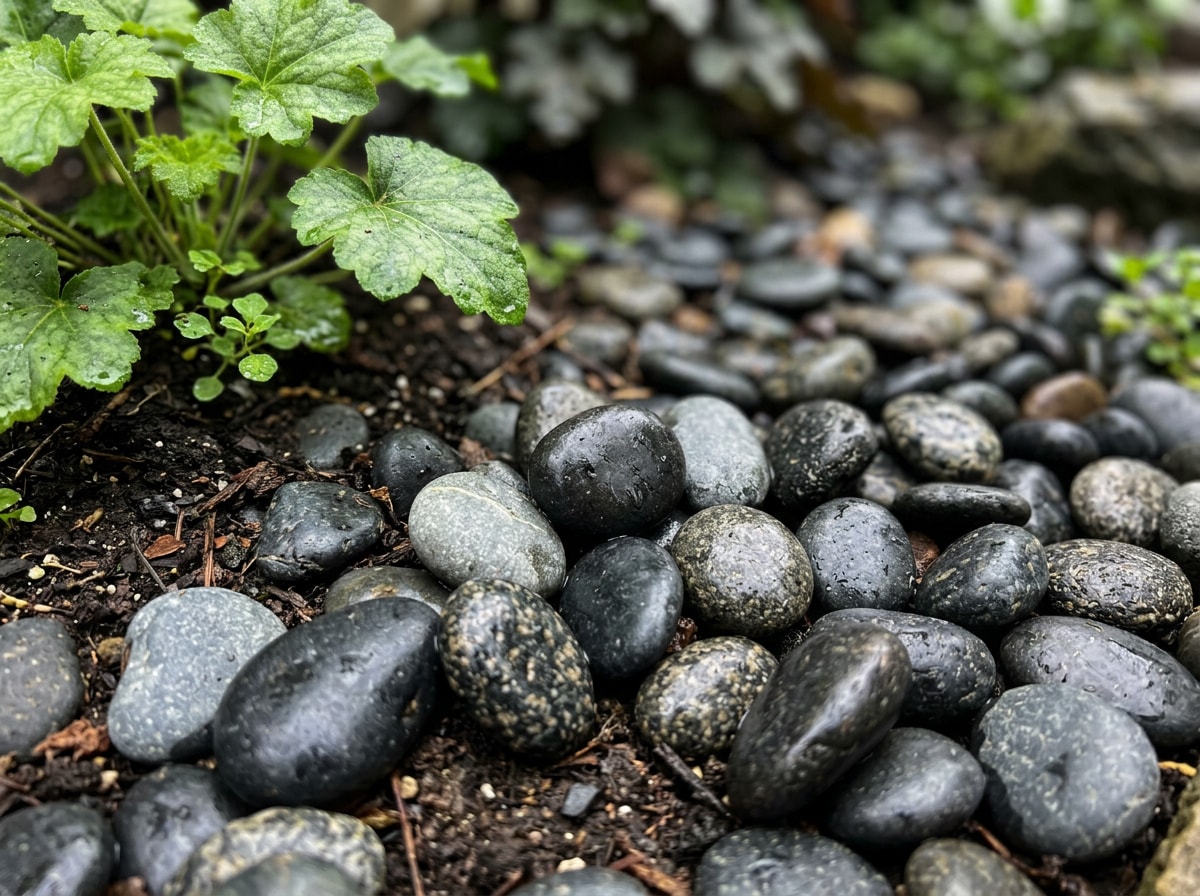
The Look and Feel of Polished Black Pebbles
Polished black pebbles are smooth to the touch and reflect light gently instead of glaring in direct sun, which keeps patios comfortable to look at. Color isn't uniform black. Most batches include soft ash-gray and deep charcoal tones, with some stones showing faint white or gray speckling and subtle green, blue, or red undertones. That natural variation keeps a bed from looking flat or artificial.
Heat, Weed Barrier, and Other Practical Questions
Dark surfaces absorb more solar radiation than light ones, and that holds true for stone groundcover. A land-grant university extension resource on mulching notes that gravel-sized mulch suppresses weeds and reduces evaporation similarly to wood chips, though surface temperatures still vary by material and sun exposure. In practice, that means black stone near a west-facing wall in July will run hotter underfoot than the same stone in afternoon shade. Keep it away from bare-foot walkways and close to shade-tolerant plantings where possible.
Weed barrier fabric under the stone is worth the extra step. It stops the stone from sinking into soil over a few seasons and makes future weeding far easier.
Ready to see which type fits your beds? Get a free estimate and we'll walk the property with you before you order a single ton.
FAQ
What are black rocks good for?
Black rocks work as a mulch alternative that retains soil moisture and suppresses weeds, plus they're used for pathways, bed borders, and water features. They also add visual contrast that lighter stone and traditional mulch can't match. Most homeowners mix uses: borders in one area, full bed coverage in another.
Where can I buy black rocks for landscaping near Winter Park?
Local landscape supply yards and stone distributors typically offer a wider range of black stone, in bulk, than big-box retailers. Bulk buying also keeps per-ton costs down on larger projects. Reach out to our team for current availability and local delivery options.
What is the best type of rock for landscaping in Florida?
It depends on the look. River rock suits natural dry creek beds, crushed granite or limestone gives pathways a modern feel, and lava rock stays light while adding color. Black stone versions of any of these bring the same function with a bolder, more dramatic finish.
Do black landscaping rocks get too hot in Florida's sun?
Yes. Dark stone absorbs more solar heat than lighter rock or mulch, so surface temperatures run noticeably hotter on direct-sun summer afternoons. That matters for barefoot patio areas and heat-sensitive plants, so place black stone away from bare-foot walkways and near shade-tolerant plantings where possible.
How much black stone do I need?
Measure the bed's square footage, then multiply by your target depth in feet (2 inches = 0.167 feet). A 100-square-foot bed at 2 inches deep needs roughly 0.6 cubic yards of stone, which usually converts to around 1 ton depending on the material's density. Suppliers can confirm the exact conversion for the specific stone you pick.
Does black landscaping rock fade over time?
Natural black stone like basalt, lava rock, or polished river pebbles holds its color far longer than dyed mulch because the color is part of the stone, not a coating. Some lighter dust or mineral bloom can build up on the surface over years, but a quick rinse usually restores the original look.
Browse the homepage for recent Central Florida landscaping projects, or check out how we handle related work like stump grinding and sod installation if you're planning a fuller yard refresh alongside your new stone beds. We also serve Orlando, Lake Mary, and the rest of Central Florida.